
Codex Manesse: Difference between revisions
No edit summary |
No edit summary |
||
| Line 17: | Line 17: | ||
Rudolf von Neuenburg.svg|20r. Rudolf II<br><span style="font-size:88%; line-height: 1.3em;">Count of Neuenburg</span> | Rudolf von Neuenburg.svg|20r. Rudolf II<br><span style="font-size:88%; line-height: 1.3em;">Count of Neuenburg</span> | ||
Toggenburger | Toggenburger Ancient.svg|22v. Kraft III<br><span style="font-size:88%; line-height: 1.3em;">Count of Toggenburg</span> | ||
von Kirchberg.svg|24r. Conrad II<br><span style="font-size:88%; line-height: 1.3em;">Count of Kirchberg</span> | von Kirchberg.svg|24r. Conrad II<br><span style="font-size:88%; line-height: 1.3em;">Count of Kirchberg</span> | ||
Leiningen.svg|26r. Frederick II<br><span style="font-size:88%; line-height: 1.3em;">Count of Leiningen</span> | Leiningen.svg|26r. Frederick II<br><span style="font-size:88%; line-height: 1.3em;">Count of Leiningen</span> | ||
Revision as of 10:10, 29 October 2017
The "Codex Manesse", also known as the "Great Heidelberg Book of Songs", was created between around 1300 and around 1340
in Zurich and is the most comprehensive collection of ballads and epigrammatic poetry in Middle High German language.
The manuscript contains almost 6,000 verses from 140 poets, the poets are arranged in order of rank. Emperor Henry VI , son of Frederick I Barbarossa,
comes first followed by kings, dukes, margraves, counts, barons, ministerialis and lastly commoners..
-

6r. Henry VI Hohenstaufen
Holy Roman Emperor -

7r. Conrad the Young
King of Jerusalem and Sicily
Duke of Swabia -

8r. Tyro
King of Scotland -

10r. Wenceslaus II
King of Bohemia -

10r. Wenceslaus II
as Duke of Moravia -

11v. Henry IV
Duke of Breslau -

13r. Otto IV
Margrave of Brandenburg -

14v. Henry III
Margrave of Meissen -

17r. Henry I
Count of Anhalt -

18r. John I
Duke of Brabant -

18r. John I
Brabant Banner -
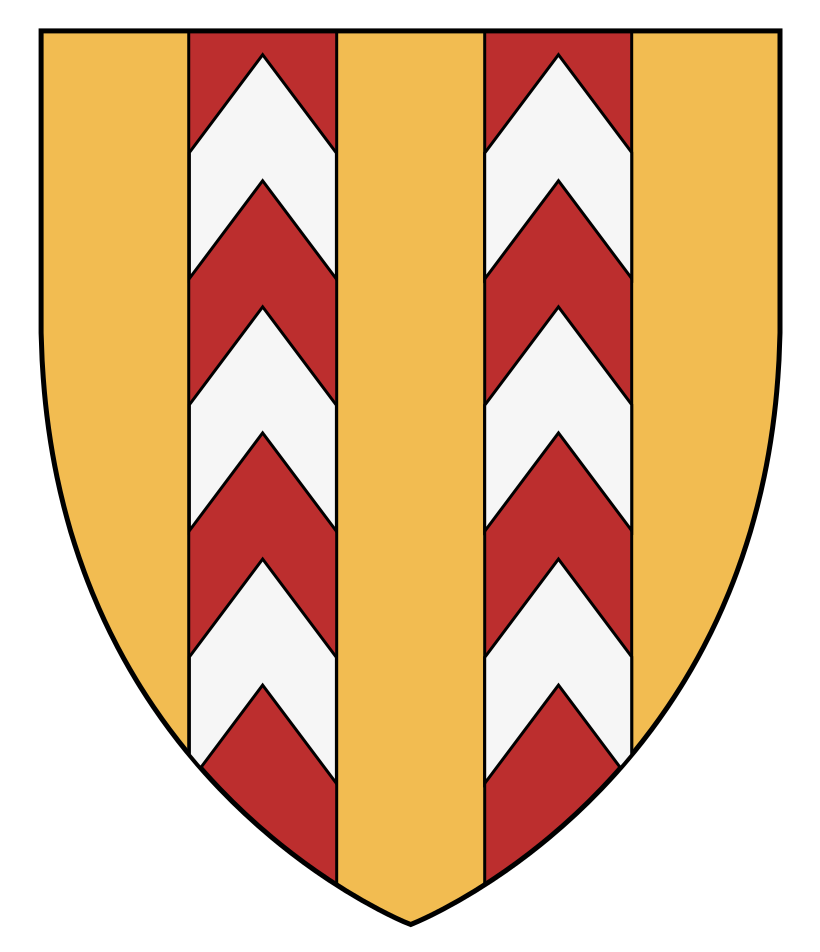
20r. Rudolf II
Count of Neuenburg -
22v. Kraft III
Count of Toggenburg -

24r. Conrad II
Count of Kirchberg -

26r. Frederick II
Count of Leiningen -

27r. Otto IV
Count of Botenlauben -

29r. Berthold IV
Margrave of Hohenburg -

30r. Heinrich von Veldeke
-

32v. Gottfried von Neuffen
-

42r. Albert II
Count of Hohenberg and Heigerloch -

42r. Albert II
Count of Hohenberg Banner -

43v. Werner
Count of Homberg -

43v. Werner
Homberg Banner -

46v. Jakob von Warte
-

48v. Eberhard von Sax
Monk -

52r. Walther von Klingen
-

54r. Rudolf von Rotenburg
-

54r. Rotenburg Banner
-
59v. Heinrich von Sax
-

61v. Heinrich II von Frauenberg
-

63r. von Kürenberg
Minstrel -

64r. Dietmar von Aist
-

66v. Wilhelm von Gliers
-

69r. Wernher von Teufen
-

70v. Heinrich II von Stretlingen
-

71v. Kristian von Hamle
-

73r. Ulrich von Gutenburg
-

75v. Heinrich von Mure
-

76v. Heinrich von Morungen
-

82v. Schenck von Limburg
-

84v. Ulrich von Winterstetten
-

98r. Reinmar der Alte
-

110r. Burkart von Hohenfels
-

113v. Hesso von Reinach
-

115r. Henry
Burgrave of Lienz -

119v. Henry IV
Count of Riedenberg
Burgrave of Regensburg -

120v. Meinloh von Sevelingen
-

122r. Heinrich von Rugge
-

124r. Walther von der Vogelweide
-

146r. Hiltbolt von Schwangau
-

149v. Wolfram von Eschenbach
-

149v. Eschenbach Banner
-

151r. Ulrich von Singenberg
Steward of St. Gallen -

158r. Ulrich von Sachsendorf
-

160v. Wachsmut von Künzingen
-

160v. Künzingen Banner
-

162v. Wilhelm III von Heinzenburg
-

164v. Leuthold von Saven
-

166v. Walther von Metze
-

166v. Metze Banner
-

169v. Rubin
-

178r. Bernger von Horheim
-

179v. Albrecht von Johansdorf
-

181v. Engelhart von Adelnburg
-

182v. Bligger II von Steinach
-

183v. Wachsmut von Mühlhausen
-

184v. Hartmann von Aue
-

184v. Aue Banner
-

188r. Reinmar III von Brennberg
-

190v. Johann I von Ringenberg
-

192v. Albrecht
Marshal of Rapperswill -

194r. Otto von Turn
-

197v. Goesli von Ehenheim
-

201r. Herrand II von Wildonie
-

202v. Konrad von Sanneck
-

204r. Heinrich II von Scharpfenberg
-

205r. Konrad Schenck von Landeck
-

213r. Winsbek
-

226v. Kristian von Luppin
-

228r. Heinrich Hetzbold von Weissensee
-

229v. Düring
-

231r. Winli
-

237r. Ulrich von Liechtenstein
-

247v. von Munegiur
-

248v. Hartwig von Raute
-

249v. Konrad von Altstetten
-

251r. Bruno II von Hornberg
-
252r. Hugo von Werbenvang
-

253v. Konrad Püller von Hohenburg
-

255r. von Trostberg
-

256v. Hartmann von Starkenberg
-

257v. Rudolf II von Stadeck
-

258v. Brunwart von Augheim
-

261r. von Stamheim
-

262v. Goeli von Baden
-

264r. Tannhäuser
-

271r. Walther von Bucheim
-
273r. Niedhart
-

281v. Heinrich Teschler
Master -

285r. Rost, Kirchherr zu Sarnen
-

290r. Heinrich von Hardegg
-

299r. von Wissenlo
-

300r. Burchardt von Wengen
-

302r. Pfeffel
-

303r. der Taler
-

305r. Heinrich
The Virtuous Scribe -

308v. Steinmar von Siessen-Stralegg
-

311r. Waltram von Gresten
-

312r. Reinmar der Fiedler
-

313r. Hawart
-

314v. Günther von dem Vorste
-

316v. Friederich der Knecht
-

318r. Frederick
Burgrave of Regensburg -

319r. Niune
-

320v. Geltar
-

321v. Dietmar der Setzer
-

323r. Reinmar von Zweter
-

344v. Wernher
Monk -

349r. Marner
-

355r. Süsskind der Jude von Trimberg
-

359r. Ulrich von Buwenburg
-

361r. Heinrich von Tettingen
-

371r. Johannes Hadlaub
Master -

381r. Regenbogen
-

397v. der Dürner
-

399r. Heinrich Frauenlob
Master -

407r. Friedrich von Sonnenburg
Master -

418r. Boppe
Vogt of Mangold -

422r. der Litschauer


