
Kingdom of Croatia: Difference between revisions
No edit summary |
No edit summary |
||
| Line 6: | Line 6: | ||
Croatia 1458-1490.svg|Kingdom of Croatia<br><span style="font-size:88%; line-height: 1.3em;">Late 14th century</span> | Croatia 1458-1490.svg|Kingdom of Croatia<br><span style="font-size:88%; line-height: 1.3em;">Late 14th century</span> | ||
Croatia 1495.svg|Kingdom of Croatia<br><span style="font-size:88%; line-height: 1.3em;">After 1495</span> | Croatia 1495.svg|Kingdom of Croatia<br><span style="font-size:88%; line-height: 1.3em;">After 1495</span> | ||
Croatia-Slavonia.svg|Kingdom of Croatia-Slavonia<br><span style="font-size:88%; line-height: 1.3em;">1868-1918<br>Officially ''Triune Kingdom of Croatia, Slavonia and Dalmatia''</span> | Croatia-Slavonia.svg|Kingdom of Croatia-Slavonia<br><span style="font-size:88%; line-height: 1.3em;">1868-1918<br>Officially ''Triune Kingdom of Croatia, Slavonia and Dalmatia''</span> | ||
</gallery> | </gallery> | ||
<gallery caption=" | <gallery caption="Additional Arms" align=center style= "color: #292929;font-size:1.2em;font-weight: normal;text-align:center;font-style: normal;"> | ||
Wijnbergen 1270 Slavonia.svg|Kingdom of Croatia<br><span style="font-size:88%; line-height: 1.3em;">Attributed arms of ''King of Slavonia'' in Wijnbergen Amorial<br>13th century</span><!-- Croatia, Slavonia and Dalmatia were all synonymous terms in medieval period. Official title of Croatian monarchs was "King of Croatia and Dalmatia", earlier "Kings of Croats and Dalmatia" (titles often used in reverse form - "Dalmatia and Croatia", "Dalmatia and Croats") while non-Croatian sources referred to them as "Kings of Slavonia" or "Slavic Kings" (Rex Sclavoniae or Rex Sclavorum) which was appropriated by them and their successors in Arpad, Anjou, etc. dynasty in communication with others. --> | Wijnbergen 1270 Slavonia.svg|Kingdom of Croatia<br><span style="font-size:88%; line-height: 1.3em;">Attributed arms of ''King of Slavonia'' in Wijnbergen Amorial<br>13th century</span><!-- Croatia, Slavonia and Dalmatia were all synonymous terms in medieval period. Official title of Croatian monarchs was "King of Croatia and Dalmatia", earlier "Kings of Croats and Dalmatia" (titles often used in reverse form - "Dalmatia and Croatia", "Dalmatia and Croats") while non-Croatian sources referred to them as "Kings of Slavonia" or "Slavic Kings" (Rex Sclavoniae or Rex Sclavorum) which was appropriated by them and their successors in Arpad, Anjou, etc. dynasty in communication with others. --> | ||
Clavomnia.svg|Kingdom of Croatia<br><span style="font-size:88%; line-height: 1.3em;">Attributed arms of ''King of Slavonia'' in Livro Amorial<br>16th century</span> | Clavomnia.svg|Kingdom of Croatia<br><span style="font-size:88%; line-height: 1.3em;">Attributed arms of ''King of Slavonia'' in Livro Amorial<br>16th century</span> | ||
Dalmatien.svg|Kingdom of Croatia<br><span style="font-size:88%; line-height: 1.3em;">Attributed arms of Croatia and Dalmatia in some German Armorials ca.16-17th century</span> | Dalmatien.svg|Kingdom of Croatia<br><span style="font-size:88%; line-height: 1.3em;">Attributed arms of Croatia and Dalmatia in some German Armorials ca.16-17th century</span> | ||
Croatia Ancient.svg|Kingdom of Croatia<br><span style="font-size:88%; line-height: 1.3em;">''Oldest Croatian coat of arms''<br>Arms based on Croatian frizatik's minted in 13th century<br>Also referred to as the ''Illyrian coat of arms''<br>From 19th century</span> | Croatia Ancient.svg|Kingdom of Croatia<br><span style="font-size:88%; line-height: 1.3em;">''Oldest Croatian coat of arms''<br>Arms based on Croatian frizatik's minted in 13th century<br>Also referred to as the ''Illyrian coat of arms''<br>From 19th century</span> | ||
Croatia 1848.svg|Kingdom of Croatia<br><span style="font-size:88%; line-height: 1.3em;">1848-1850<br>Arms during the 1848-1850 Revolution</span><!-- During the 1848-1850 revolutionary period Croatia, Slavonia and Dalmatia (and their respective portions of the military frontier/march) were under control of Ban Josip Jelačić and his council. The Ban's council and the Croatian Parliament (Sabor) expressed loyalty to the Emperor-King but also requested re-unification of Croatian lands under single government and full autonomy within Habsburg Monarchy. The period ended in 1850 when all the lands were put under direct command of the Imperial Court in Vienna and all the symbols professing unification banned and previous "status quo" enforced...this period lasted until 1867/8 when the Croatian-Hungarian Settlement was agreed, returning Croatia within the "Lands of the St. Stephen" and granting Croatia autonomy, although Dalmatia still remained under direct imperial control the newly formed autonomous kingdom of Croatia-Slavonia also claimed Dalmatia and its officially name was "Triune Kingdom of Croatia, Slavonia and Dalmatia" - see below. --> | |||
</gallery> | </gallery> | ||
Revision as of 09:49, 19 July 2021
From 1102 in personal/dynastic union with the Kingdom of Hungary
- Coat of Arms
-

Kingdom of Croatia
13th century -

Kingdom of Croatia
Early-mid 14th century -

Kingdom of Croatia
Late 14th century -

Kingdom of Croatia
After 1495 -

Kingdom of Croatia-Slavonia
1868-1918
Officially Triune Kingdom of Croatia, Slavonia and Dalmatia


- Additional Arms
-

Kingdom of Croatia
Attributed arms of King of Slavonia in Wijnbergen Amorial
13th century -

Kingdom of Croatia
Attributed arms of King of Slavonia in Livro Amorial
16th century -

Kingdom of Croatia
Attributed arms of Croatia and Dalmatia in some German Armorials ca.16-17th century -

Kingdom of Croatia
Oldest Croatian coat of arms
Arms based on Croatian frizatik's minted in 13th century
Also referred to as the Illyrian coat of arms
From 19th century -

Kingdom of Croatia
1848-1850
Arms during the 1848-1850 Revolution


- Crownlands in the Austrian Empire
-

Kingdom of Croatia
1527-1848; 1850-1868 -

Kingdom of Slavonia
1699-1868 -
Kingdom of Dalmatia
1815-1918


- Ruling houses
-

House of Trpimirović
ca.925-1091 -

House of Arpad
1091-1290
Nominal kings until 1102
de facto after 1102 -

House of Anjou-Hungary
Charles Martel
1290–1295
Contested by Andrew III -

House of Arpad
Andrew III
1295-1301 -

House of Anjou-Hungary
1301–1385 -

House of Anjou-Durazzo
Charles of Durazzo
1385–1386 -

House of Anjou-Hungary
Mary
1386–1395
With Sigismund -

House of Kotromanić
Tvrtko I
1390–1391
Contested by Mary and Sigismund -

House of Luxembourg
Sigismund
1387-1437
Until 1395 as King-consort -

House of Habsburg
Albert
1437–1439
Ladislaus V
1440–1457 -

House of Jagiellon
Vladislaus I
1440–1444 -

House of Hunyadi
Matthias I
1458–1490 -

House of Jagiellon
Vladislaus II
1490–1516
Louis II
1516–1526 -

House of Habsburg-Austria
1526–1780 -

House of Habsburg-Lorraine
1780–1918


- Duchies
-

-
-


- Banates
-

-


- Counties
-
-

-

-

-

-

-

-

-

-

-

-

-

-


- Lordships
-

-

-

-

-

-

-

-

-

-


- Republics
-

-


- Noble Houses
-

House of Adamović Čepinski
-

House of Adorjan de Varad
-

House of Alapić
-
House of Alben
-

-
-

-

House of Andreis
-

House of Arneri
-
-

-

-

House of Bakčić
-

-

-

House of Bartaković
-

-

-

House of Berislavić Grabarski
-

-

House of Bibić
-

House of Bisaljić
-
-

-

House of Bojničić
-

House of Bombelles
-

House of Both
-

House of Brajković
-

House of Brzojević
-

-

House of Burmasović
-

-

House of Buzan
-

House of Calcina
-

-

House of Cedulini
-

-

-

House of Cetinjanić
-

House of Clevna
-

House of Čubretić
-
House of Čupor
-

House of Ćipiko
-

House of Dančević
-

House of Derenčin
-

House of Dešantić
-

House of Dešković
-

House of Detrico
-

House of Diknić
-

House of Divnić
-

House of Divojević
-

House of Dobrijević
-

House of Dojmi
-

-

House of Domjanić de Zelina
-

-

-
House of Dražojević
-

-
-
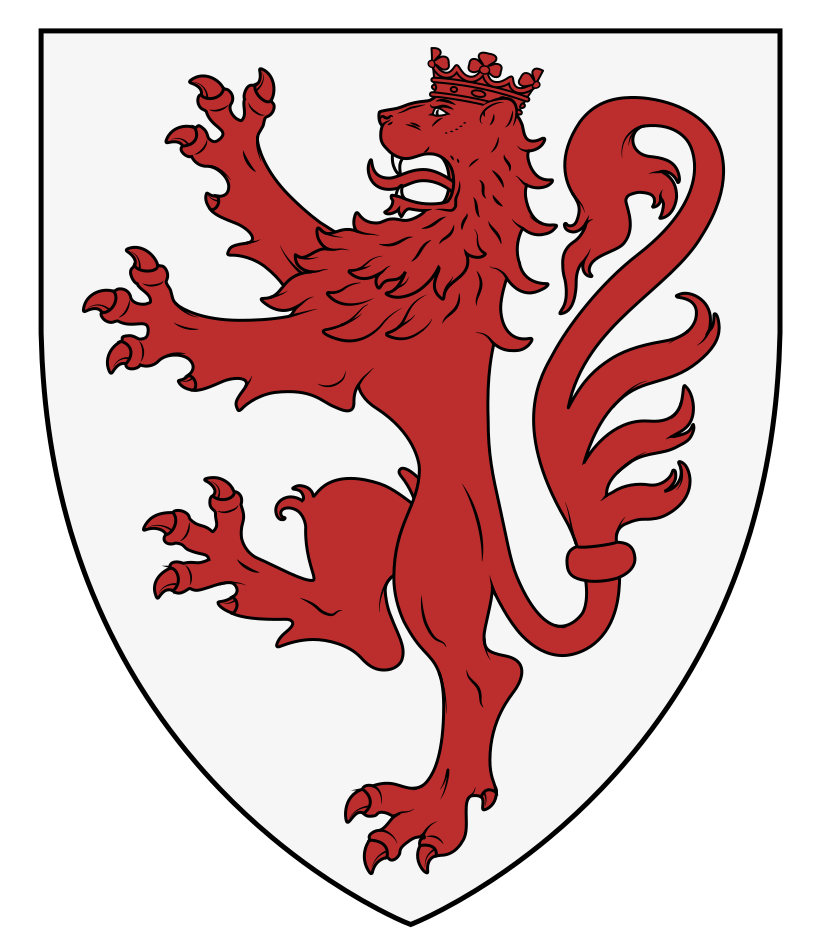
House of Enzeblović
-

House of Fanfonja
-

House of Ferić
-

House of Feštetić
-

House of Filipović
-

House of Franić
-
-

-

House of Gojković
-
House of Gorjanski
-

House of Gradanović
-

House of Gregorijanec
-

House of Grisogono
-

House of Grubčević
-

House of Grubišić
-

-

-

-
House of Henning
-

House of Horvat
-

-

-

House of Hvaoković
-

-

-

-
-

House of Iveljić
-

House of Jagić
-

House of Jamomet
-

-

House of Jurić
-

House of Jurinić
-

House of Jurišić
-

House of Jurković
-
-
-

House of Karlović
-

House of Kaštelanović
-

-

House of Klešić
-

House of Knezi
-

House of Knezić
-

House of Knezović
-

House of Knežević
-

House of Knežević de Virje
-

-

House of Kobilić
-

-

House of Kopčić
-

-

-

House of Kosović
-
House of Krajac
-

-

House of Križić
-

House of Kružić
-

House of Kukuljević
-

-

-

House of Labaš
-

-

-

House of Lenković
-

House of Lewew
-

-

House of Masnović
-

House of Matafari
-

House of Mikulanić
-

House of Mirilović
-

-

-

-

House of Našić
-
-

House of Neorić
-

House of Novaković
-

House of Novosel
-

House of Nozdronja
-

-

-

-

-

House of Papalić
-

-

-

House of Perušić
-

-

House of Posavec
-

-

House of Portio
-

House of Radić
-

House of Rajković
-

-

House of Rešić
-
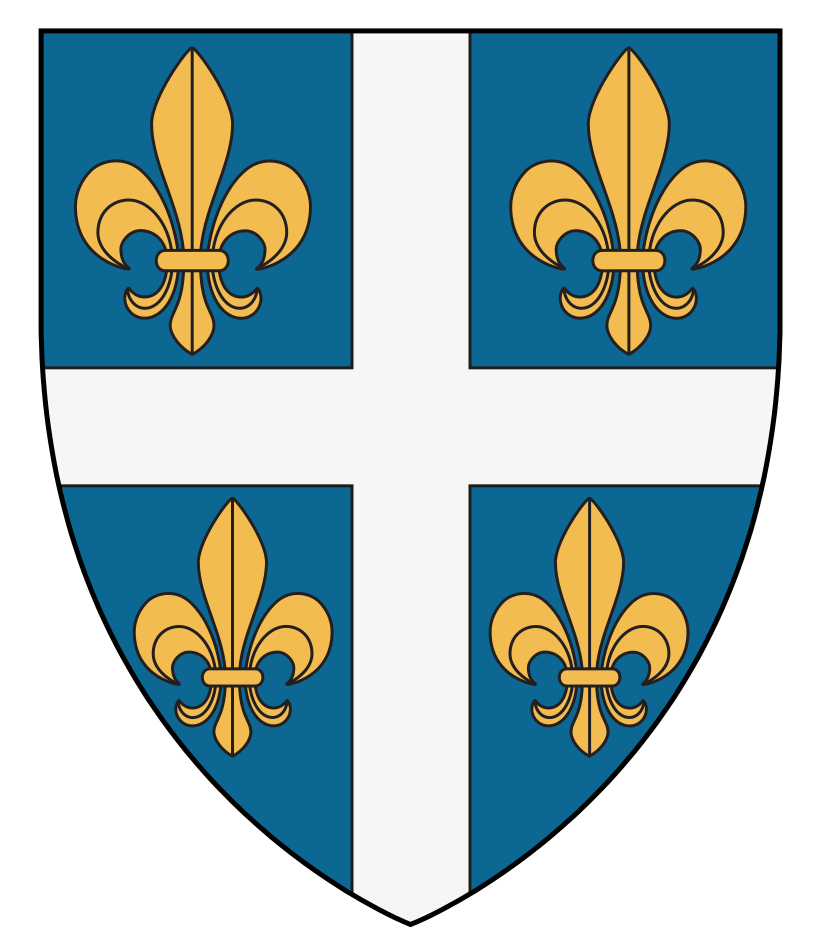
House of Ružerević
-

House of Sertić
-

House of Sitnjičanić
-

House of Sladojević
-

-

House of Stipanović
-

-

House of Šimunčić
-

House of Šiprak
-

House of Šipušić
-

House of Škrlec
-
-

House of Tadiolović
-

-

House of Tutnić
-

House of Ugrinović
-

-

House of Vitez
-

-

House of Vladimirović
-

-

House of Vojnović
-

-

House of Zabočki
-
-

House of Zmajević
-
-

House of Županović


.svg)


