
Peerage of France: Difference between revisions
(rechecked up to 3 auvergne 17) |
No edit summary |
||
| Line 13: | Line 13: | ||
Burgundy Ancient.svg|[[Duchy of Burgundy|Duke of Burgundy]] | Burgundy Ancient.svg|[[Duchy of Burgundy|Duke of Burgundy]] | ||
Normandy.svg|[[Duchy of Normandy|Duke of Normandy]] | Normandy.svg|[[Duchy of Normandy|Duke of Normandy]] | ||
Aquitaine.svg|[[Duchy of Aquitaine|Duke of Aquitaine]] | |||
Toulouse.svg|[[County of Toulouse|Count of Toulouse]] | Toulouse.svg|[[County of Toulouse|Count of Toulouse]] | ||
Flandern.svg|[[County of Flanders|Count of Flanders]] | Flandern.svg|[[County of Flanders|Count of Flanders]] | ||
Revision as of 20:43, 29 July 2015
The Peerage of France consisted of the highest-ranking members of the French nobility. The original twelve peers were constituted in time immemorial.
Starting from the 13th century, new peerages were created by the King of France. The coats of arms shown below depict the arms of the peer when the peerage was granted.
Peers who changed arms are marked with an asterisk (*), followed by a reference to titles later or formerly borne.
Peerages originally granted to more than one peer are marked with a double dagger (‡).
The Twelve | Capet | Valois | Bourbon
- Twelve Ancient Peers
-

Archbishop of Reims
Duke of Reims -

Bishop of Laon
Duke of Laon -

Bishop of Langres
Duke of Langres -

Bishop of Beauvais
Count of Beauvais -
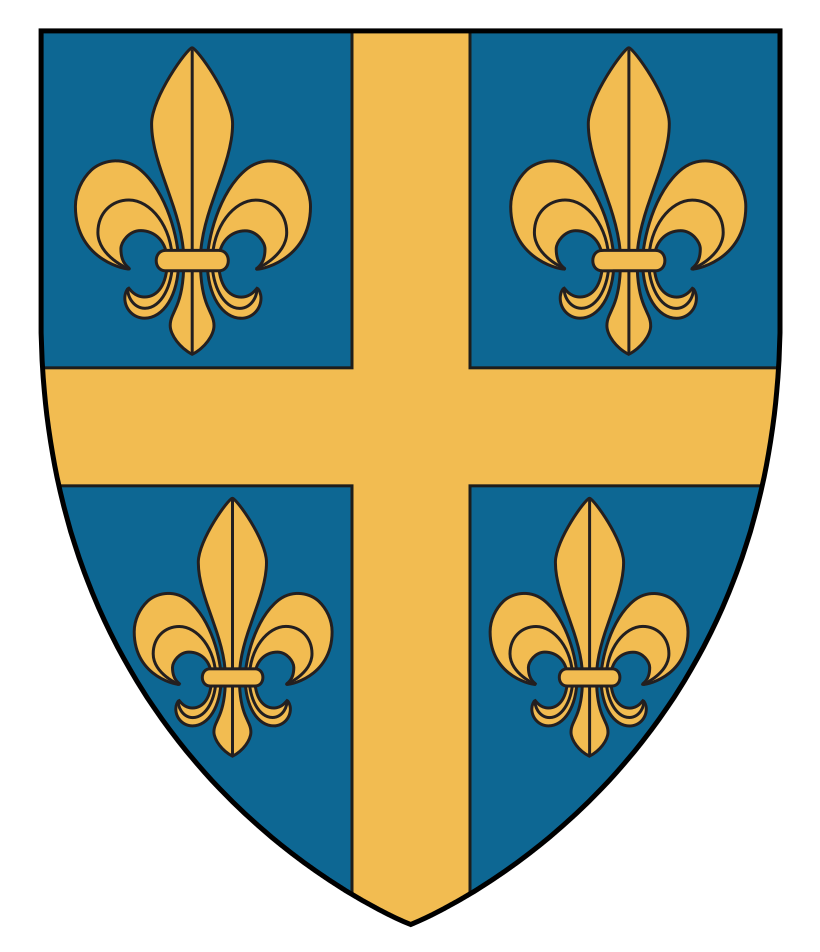
Bishop of Châlons
Count of Châlons -

Bishop of Noyon
Count of Noyon -

-

-

-

-


The Twelve | Capet | Valois | Bourbon
- Peerages Created by House of Capet
-

Henry III
King of England
Duke of Aquitaine (1259) -

Charles de France
Count of Valois
Count of Anjou (1297) -

Robert II d'Artois
Count of Artois (1297) -
Jean II de Bretagne
Duke of Brittany (1297) -

Philippe de France
Count of Poitiers (1315) -

Charles de France
Count of La Marche (1316) -

Louis de France
Count of Evreux (1316) -

Philippe d'Evreux
Count of Angouleme (1317)‡
Count of Mortain (1335)‡ -

Jeanne de France
Countess of Angouleme (1317)‡
Countess of Mortain (1335)‡ -

Charles d'Evreux
Count of Etampes (1327) -

Louis de Clermont
Duke of Bourbon (1327)
Count of La Marche (1327)


The Twelve | Capet | Valois | Bourbon
- Peerages Created by House of Valois
-
Robert III d'Artois
Count of Beaumont-le-Roger (1328) -
Jean de France
Duke of Normandy (1331)
Count of Anjou (1331)
Count of Maine (1331) -

Philippe de France
Duke of Orleans (1344)
Count of Valois (1344)
Count of Beaumont-le-Roger (1344) -

Marguerite de France
Countess of Burgundy and Artois
Countess of Nevers (1347)‡
Countess of Rethel (1347)‡ -
Louis II de Dampierre
Count of Flanders
Count of Nevers (1347)‡
Count of Rethel (1347)‡ -

Charles II
King of Navarre
Count of Mantes (1353)
Count of Beaumont-le-Roger (1354)
Baron of Montpellier (1371) -

Charles de France
Dauphin of France
Duke of Normandy (1355) -

Jean de France
Count of Poitou (1357)
Count of Macon (1359)
Duke of Berry (1360)
Duke of Auvergne (1360)
Count of Poitou (1369) -
Louis de France
Duke of Anjou (1360)
Count of Maine (1360) -

Philippe de France
Duke of Touraine (1360)
*later Duke of Burgundy -

Philippe de France
Duke of Burgundy (1363)
*formerly Duke of Touraine -

Pierre II d'Alençon
Count of Alencon (1367) -

Louis de France
Duke of Touraine (1386)
Duke of Orleans (1392)
Count of Valois (1392)
Count of Angouleme (1394)
Count of Perigord (1399)
Castellan of Chateau-Thierry (1400)
Count of Soissons (1404)
Baron of Coucy (1404)
Duke of Valois (1406) -

Louis de France
Dauphin of France
Duke of Guyenne (1401) -

Jean de France
Duke of Touraine (1401)
Castellan of Mortagne (1407)
*later Dauphin of France -
Charles III
King of Navarre
Duke of Nemours (1404) -

Antoine de Bourgogne
Duke of Brabant
Count of Rethel (1405) -

Pierre d'Evreux
Count of Mortain (1408) -

Jean I d'Alençon
Duke of Alençon (1415) -
Jean de France
Dauphin of France
Duke of Berry (1416)
Count of Poitou (1416)
*also Duke of Touraine -
Charles de France
Duke of Touraine (1416)
*later Dauphin of France -
Charles de France
Dauphin of France
Duke of Berry (1417)
Count of Poitou (1417)
*also Duke of Touraine -

Archibald Douglas
Earl of Douglas
Duke of Touraine (1423) -

Jean d'Orleans
Count of Mortain (1424) -

John Stewart
Lord of Aubigny
Count of Evreux (1427) -

James I
King of Scotland
Count of Saintonge (1428) -

Charles IV d'Anjou
Count of Maine
Count of Mortain (1434) -

Philippe III de Bourgogne
Duke of Burgundy
Count of Flanders and Artois
Count of Macon (1435)
Count of Auxerre (1435) -
Charles d'Artois
Count of Eu (1458) -

Gaston IV de Foix
Count of Foix (1458) -

Charles de Bourgogne
Count of Nevers (1459) -

Charles de France
Duke of Berry (1461)
*later Duke of Normandy and Guyenne -

Éléonore de Bourbon
Countess of La Marche
Duchess of Nemours (1462)‡ -

Bernard VIII d'Armagnac
Count of Pardiac
Duke of Nemours (1462)‡ -

Jean II de Bourgogne
Count of Nevers (1464) -

Charles de France
Duke of Normandy (1465)
Count of Mortain (1465)
*formerly Duke of Berry, later Duke of Guyenne -

Charles de France
Duke of Guyenne (1469)
*formerly Duke of Berry and Normandy -

Pierre de Bourbon
Lord of Beaujeu
Count of La Marche (1477) -

Frederick of Naples
Count of Villefranche (1480) -

François d'Orleans
Count of Angouleme
Duke of Valois (1498) -

Engelbert de Cleves
Count of Nevers (1505) -

Claude de France
Countess of Soissons (1505)
Baroness of Coucy (1505) -
Gaston de Foix
Duke of Nemours (1507) -
Charles IV de Bourbon
Duke of Vendome (1515) -

Louise de Savoie
Duchess of Angouleme (1515)
Duchess of Anjou (1515)
Duchess of Nemours (1524)
Duchess of Bourbon (1527)
Duchess of Chatellerault (1527)
Duchess of Auvergne (1528)
Duchess of Chatellerault (1530) -

François de Bourbon
Duke of Chatellerault (1515) -
Jeanne d'Orleans
Duchess of Valois (1516) -

Marguerite d'Orleans
Duchess of Berry (1517) -

Claude de Lorraine
Duke of Guise (1528) -
François I de Cleves
Duke of Nevers (1539)‡ -

Marguerite de Bourbon
Duchess of Nevers (1539)‡ -
Louise de Bourbon
Duchess of Montpensier (1539)‡ -

Louis de Bourbon
Duke of Montpensier (1539)‡ -

Charles de France
Duke of Orleans (1540)
Duke of Angouleme (1540)
Duke of Chatellerault (1540)
Count of Clermont (1540)
Count of La Marche (1540)
Duke of Bourbon (1544) -

François de Lorraine
Duke of Aumale (1547) -
Marguerite de France
Duchess of Berry (1550) -

Anne de Montmorency
Duke of Montmorency (1551) -

Jeanne III
Queen of Navarre
Duchess of Albret (1556) -

Henri de France
Duke of Anjou (1561)
Duke of Bourbon (1566)
Count of Forez (1566)
Duke of Auvergne (1569) -
François de France
Duke of Evreux (1560)
Duke of Alençon (1566)
Duke of Chateau-Thierry (1566)
Count of Perche (1566)
Count of Meulan (1566)
Count of Mantes (1566)
Count of Dreux (1569)
*later Duke of Anjou, etc. -
Henriette de Cleves
Duchess of Nevers (1566)‡
Duchess of Rethel (1581)‡ -

Louis Gonzague
Duke of Nevers (1567)‡
Duke of Rethel (1581)‡ -

Sebastian de Luxembourg
Duke of Penthievre (1569) -

Nicolas de Lorraine
Count of Vaudemont
Duke of Mercoeur (1569) -

Antoine de Crussol
Duke of Uzes (1572) -

Charles de Lorraine
Duke of Mayenne (1573) -

François de Bourbon
Duke of Saint-Fargeau (1576) -

François de France
Duke of Anjou (1576)
Duke of Touraine (1576)
Duke of Berry (1576)
*also Duke of Alençon, etc. -

Anne de Joyeuse
Duke of Joyeuse (1581) -

Jean Louis de Nogaret de La Valette
Duke of Épernon (1581) -
François de Luxembourg
Duke of Piney (1581) -

Albert de Gondi
Duke of Retz (1581) -

Charles I de Lorraine
Duke of Elbeuf (1581) -

Anne Chabot
Duchess of Hallwin (1587)‡ -

Charles d'Hallwin
Marquis of Meignelais
Duke of Hallwin (1587)‡ -

Louis VII de Rohan
Duke of Montbazon (1588)


The Twelve | Capet | Valois | Bourbon
- Peerages Created by House of Bourbon
-

Gilbert III de Lévis
Duke of Ventadour (1589) -
Hercule de Rohan
Duke of Montbazon (1595) -

Gabrielle d'Estrées
Duchess of Beaufort (1597) -

César de Bourbon
Duke of Vendome (1598) -

Charles de Gontaut
Duke of Biron (1598) -
Claude de La Trémoille
Duke of Thouars (1599) -
Henri de Lorraine
Duke of Aiguillon (1600) -

Henri de Rohan
Duke of Rohan (1603) -

Maximilien de Béthune
Marquis of Rosny
Duke of Sully (1606) -

François d'Orléans-Longueville
Duke of Fronsac (1608) -
Marie de Bourbon
Duchess of Montpensier (1608) -

Charles de Montmorency
Duke of Damville (1610) -
Anne d'Hallwin
Duchess of Candale (1611)‡
Duchess of Hallwin (1621)‡ -

Henri de Nogaret de La Valette
Duke of Candale (1611)‡
Duke of Candale (1621) -

Henri de Bourbon
Prince of Conde
Duke of Châteauroux (1616)
Duke of Montmorency (1633)‡
Duke of Albret (1641) -

Charles d'Albert
Duke of Luynes (1619) -

François de Bonne
Duke of Lesdiguières (1620) -

Charles II de Cossé
Duke of Brissac (1620) -
Roger de Saint-Lary
Duke of Bellegarde (1620) -
Marguerite Charlotte de Luxembourg
Duchess of Piney (1620) -
Léon d'Albert
Duke of Piney (1620) -

Charles de Schomberg
Duke of Hallwin (1621)‡ -

Honoré d'Albert
Duke of Chaulnes (1621) -
Gaston de France
Duke of Orleans (1626)
Duke of Chartres (1626)
Duke of Valois (1630) -

Claude de Lorraine
Duke of Chevreuse (1627) -

Armand Jean du Plessis
Duke of Richelieu (1631)
Duke of Fronsac (1634) -

Bernard de Nogaret de La Valette
Duke of La Valette (1631) -
François V de La Rochefoucauld
Duke of La Rochefoucauld (1631) -
Charlotte Marguerite de Montmorency
Duchess of Montmorency (1633)‡ -
Pierre de Gondi
Duke of Retz (1634) -

Antoine de l'Age
Lord of Puylaurens
Duke of Aiguillon (1634) -

Claude de Rouvroy
Duke of Saint-Simon (1635) -

Jacques-Nompar de Caumont
Duke of La Force (1637) -
Marie-Madeleine de Vignerot
Duchess of Aiguillon (1638) -

Honoré II Grimaldi
Prince of Monaco
Duke of Valentinois (1642) -

Godefroy-Maurice de La Tour d'Auvergne
Duke of Bouillon
Duke of Albret (1652)
Duke of Chateau-Thierry (1652) -
Marguerite de Rohan
Duchess of Rohan (1652)‡ -

Henri de Chabot
Duke of Rohan (1652)‡ -
Louis II de Bourbon
Prince of Conde
Duke of Bourbon (1661) -
Philippe de France
Duke of Orleans (1661)
Duke of Chartres (1661)
Duke of Valois (1661)
Duke of Nemours (1672)
Duke of Montpensier (1695) -

François Henri de Montmorency
Duke of Piney (1662) -

Henri de Bourbon
Duke of Verneuil (1663) -
François Annibal d'Estrées
Marquis of Coeuvres
Duke of Estrées (1663) -

Antoine II de Gramont
Duke of Gramont (1663) -

Charles de La Porte
Duke of La Meilleraye (1663)
Duke of Rethel-Mazarin (1663)‡ -

Hortense Mancini
Duchess of Rethel-Mazarin (1663)‡ -

Nicolas V de Neufville
Duke of Villeroy (1663) -
Gabriel de Rochechouart
Duke of Mortemart (1663) -

Charles III de Créquy
Prince of Poix
Duke of Créquy (1663) -

François Honorat de Beauvilliers
Duke of Saint-Aignan (1663) -

Henri François de Foix
Duke of Randan (1663) -
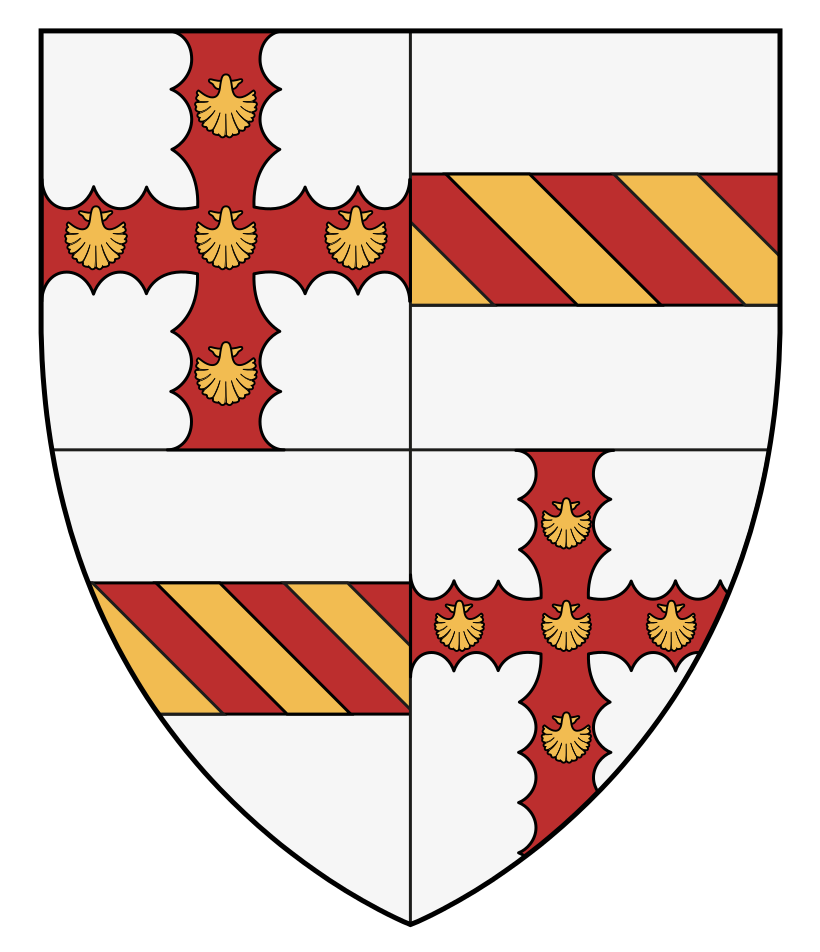
Roger du Plessis
Duke of La Roche-Guyon (1663) -

René Potier
Duke of Tresmes (1663) -

Anne de Noailles
Duke of Noailles (1663) -

Armand de Cambout
Duke of Coislin (1663) -

César I de Choiseul
Count of Praslin
Duke of Choiseul (1665) -

Antoine d'Aumont
Duke of Aumont (1665) -

Henri de Saint-Nectaire
Duke of La Ferté-Senneterre (1665) -

Charles de Sainte-Maure
Duke of Montausier (1665) -

Louise-Françoise de La Baume Le Blanc
Duchess of La Vallière (1667) -
Françoise de Lorraine
Duchess of Vendome
Duchess of Penthievre (1668) -

Louis-Armand de Béthune
Duke of Béthune-Charost (1690) -

François de Harlay
Archbishop of Paris
Duke of Saint-Cloud (1690) -
Louis Alexandre de Bourbon
Count of Toulouse
Count of Eu (1694)
Duke of Damville (1694)
Duke of Penthièvre (1697)
Duke of Châteauvillain (1703)
Duke of Rambouillet (1711) -
Louis Auguste de Bourbon
Duke of Maine
Duke of Aumale (1695) -

Anne of Bavaria
Princess of Conde
Duchess of Guise (1704)‡ -
Henri Jules de Bourbon
Prince of Conde
Duke of Guise (1704)‡ -

Louis François de Boufflers
Duke of Boufflers (1708) -

Claude Louis Hector de Villars
Duke of Villars (1709) -
Charles de France
Duke of Berry
Duke of Alençon (1710)
Duke of Angouleme (1710)
Count of Ponthieu (1710) -

Henri d'Harcourt
Duke of Harcourt (1710) -

James FitzJames
Duke of Berwick
Duke of Fitz-James (1710) -

Louis Antoine de Pardaillan de Gondrin
Duke of Antin (1711) -

Louis Auguste d'Albert
Duke of Chaulnes (1711) -
Hercule Mériadec de Rohan
Prince of Soubise
Duke of Rohan-Rohan (1714) -

Louis de Melun
Prince of Epinoy
Duke of Joyeuse (1714) -

Camille d'Hostun
Count of Tallart
Duke of Hostun (1715) -
Louis de Brancas
Duke of Villars-Brancas (1716) -

Louis d'Aubusson
Duke of Roannais (1716) -

Jacques I Goyon de Matignon
Count of Thorigny
Duke of Valentinois (1716) -

Philippe Jules Mancini
Duke of Nevers (1720) -
Charles-Armand de Gontaut
Duke of Biron (1723) -

Charles Eugène de Lévis
Duke of Levis (1723) -
Charles François de La Baume Le Blanc
Duke of La Valliere (1723) -

Louis François de Bourbon
Prince of Conti
Duke of Mercoeur (1723) -

Jean Hercule de Rosset
Duke of Fleury (1736) -

Alexis de Châtillon
Duke of Chatillon (1736) -

Charles Louis Auguste Fouquet
Marquis of Belle-Isle
Duke of Gisors (1742) -

Emmanuel-Félicité de Durfort
Duke of Duras (1756) -

Antoine de Quélen
Duke of La Vauguyon (1758) -

Étienne François de Choiseul
Duke of Stainville (1758)
Duke of Choiseul d'Amboise (1764) -

César Gabriel de Choiseul
Duke of Praslin (1762) -
Louis Stanislas de France
Count of Provence
Duke of Anjou (1771)
Duke of Alençon (1774)
Duke of Brunoy (1777) -
Charles de France
Count of Artois
Duke of Angouleme (1773)
Duke of Auvergne (1773)
Duke of Mercoeur (1773)
Duke of Berry (1776)
Duke of Chateauroux (1776) -

Gaspard de Clermont-Tonnerre
Duke of Clermont-Tonnerre (1775) -
Louis Jean Marie de Bourbon
Count of Toulouse
Duke of Penthievre
Duke of Aumale (1776)
Duke of Gisors (1777)
Duke of Amboise (1787) -

Charles Lennox
Duke of Richmond and Lennox
Duke of Aubigny (1777) -
Marie Adélaïde de France
Duchess of Louvois (1777)‡ -
Sophie de France
Duchess of Louvois (1777)‡ -
Claude de Choiseul
Duke of Choiseul (1787) -

François-Henri de Franquetot
Duke of Coigny (1787)


The Twelve | Capet | Valois | Bourbon


