
Château de Ravel: Difference between revisions
No edit summary |
No edit summary |
||
| Line 33: | Line 33: | ||
Blank.svg|Destroyed<br><span style="font-size:88%; line-height: 1.3em;">Originally one shield was located here, destroyed by enlarging the window.</span> | Blank.svg|Destroyed<br><span style="font-size:88%; line-height: 1.3em;">Originally one shield was located here, destroyed by enlarging the window.</span> | ||
Blank.svg|Destroyed<br><span style="font-size:88%; line-height: 1.3em;">Originally one shield was located here, destroyed by enlarging the window.</span> | Blank.svg|Destroyed<br><span style="font-size:88%; line-height: 1.3em;">Originally one shield was located here, destroyed by enlarging the window.</span> | ||
Ravel 22 Chatelperron.svg|22. Hugues de Châtelperron<br><span style="font-size:88%; line-height: 1.3em;">Lord of Châtelperron</span> | Ravel 22 Chatelperron 2.svg|22. Hugues de Châtelperron<br><span style="font-size:88%; line-height: 1.3em;">Lord of Châtelperron</span> | ||
Ravel 23 Chatillon-en-Bazois.svg|23. Robert de Châtillon<br><span style="font-size:88%; line-height: 1.3em;">Lord of Châtillon-en Bazois</span> | Ravel 23 Chatillon-en-Bazois.svg|23. Robert de Châtillon<br><span style="font-size:88%; line-height: 1.3em;">Lord of Châtillon-en Bazois</span> | ||
</gallery> | </gallery> | ||
Revision as of 07:44, 11 October 2024
In the castle of Ravel, located in Auvergne, exists an aula decorated with a long fresco featuring the arms of various princes and local nobles.
Pierre Flotte (d.1302), councillor of Philippe IV le Bel, received the castle as a gift from the king in 1294.
The dating of these frescs are still in debate. It is most probable that Pierre Flote ordered them around 1300-1301, but his death on 11/07/1302 was premature to see them finished.
The shield of Louis de France, as king of Navarre, seems a good candidate to date them after his mother's death in 1305. But his seal before that date already shows the mi-parti France-Navarra. A better candidate seems Othon comte de Bourgogne who is also present. He died 1303. This allows us to date the realization of those wall paintings between 1300 and 1303.
- Southern Wall
-

1. Philippe IV le Bel
King of France -

2. Edward I Plantagenêt
King of England -

3. Louis le Hutin
Future king of France and Navarre -

4. Charles de France
Count of Valois -

5. Louis de France
Count of Evreux -
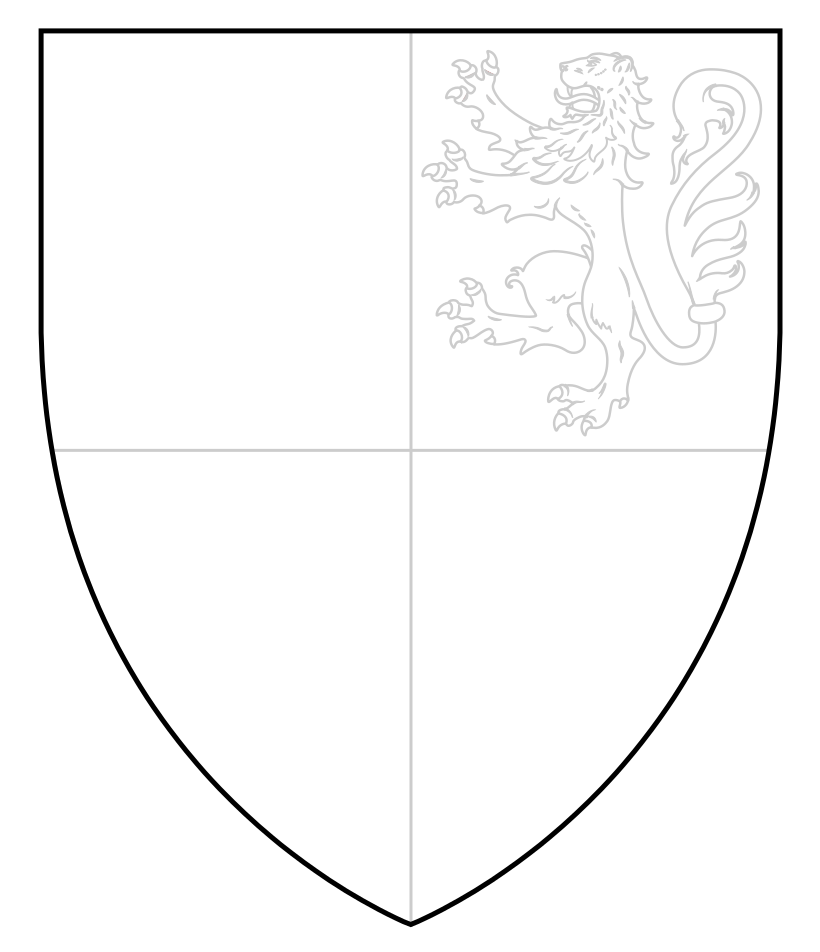
6. Unreadable
Pictures show a hint of a quarterly shield with a lion top left
Possibly Alphonse de la Cerda? -

7. Robert de Bourbon
Count of Clermont-en-Bauvaisis
Lord of Bourbon -

8. Robert Dauphin
Dauphin d'Auvergne
Count of Clermont-Auvergne -

9. Robert de Bourgogne
Duke of Burgundy -

10. Robert d'Auvergne
Count of Auvergne and Boulogne -

11. Jean de Bretagne
Duke of Brittany -

12. Jean de Forez
Count of Forez -

13. Jean de Dreux
Count of Dreux
Chambrier of France -
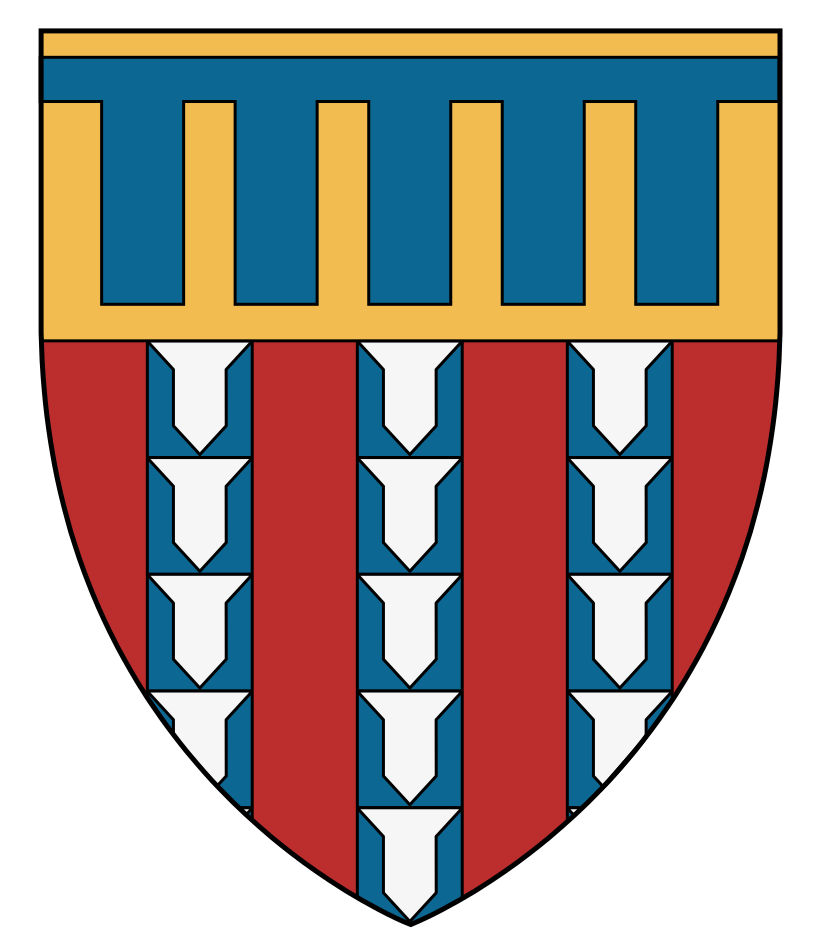
14. Guy de Châtillon
Count of Saint Pol
Grand Bouteiller of France -
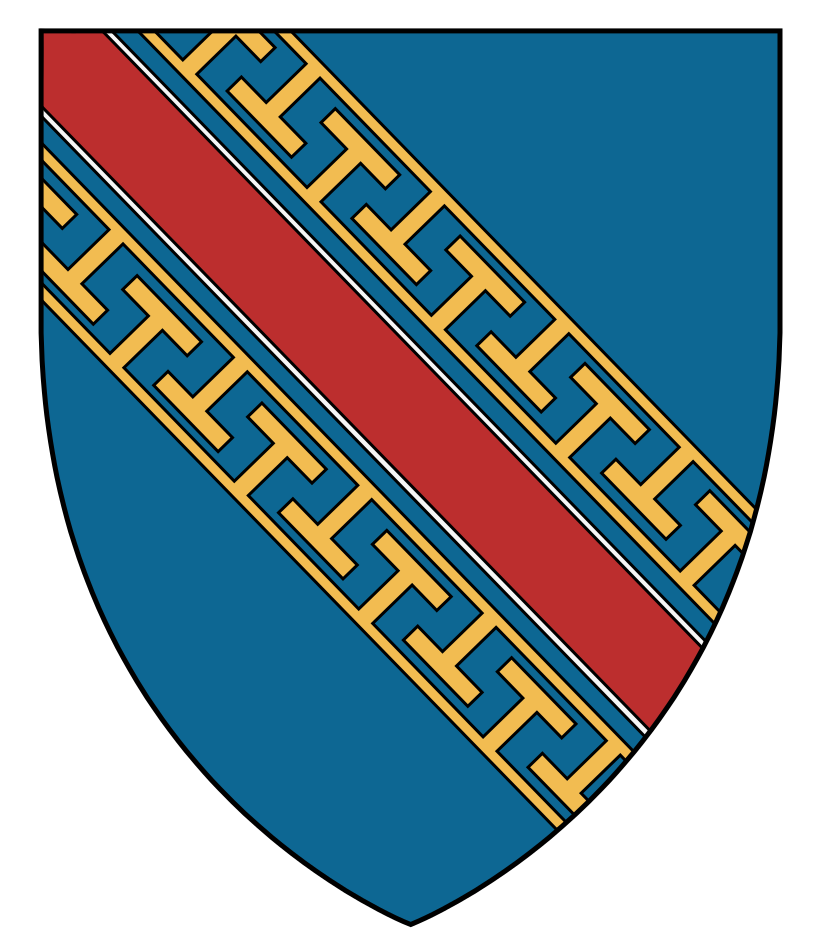
15. Jean de Sancerre
Brother of the Count of Sancerre -

16. Uncertain
Either the Count-Bishop of Châlons or the Bishop of Clermont -

17. Otton de Bourgogne
Count of Burgundy -

18. Hugues de Châtillon
Count of Blois


- Western Wall
-

Destroyed
Originally one shield was located here, destroyed by enlarging the window. -
Destroyed
Originally one shield was located here, destroyed by enlarging the window. -

19. Guillaume Flote
Lord of Ravel -

20. Isabeau de Bourgogne
Sister of Duke Robert of Burgundy -

21. Bertrand de Rochefort d'Aurouze
Lord of Rochefort d'Aurouze -
Destroyed
Originally one shield was located here, destroyed by enlarging the window. -
Destroyed
Originally one shield was located here, destroyed by enlarging the window. -
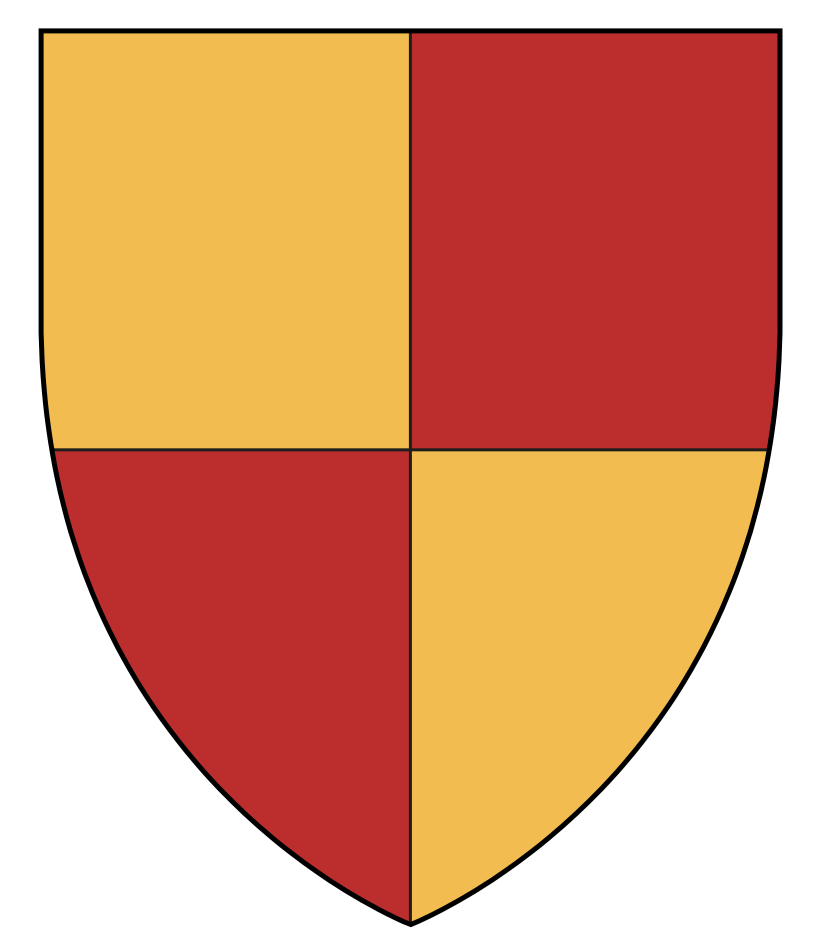
22. Hugues de Châtelperron
Lord of Châtelperron -
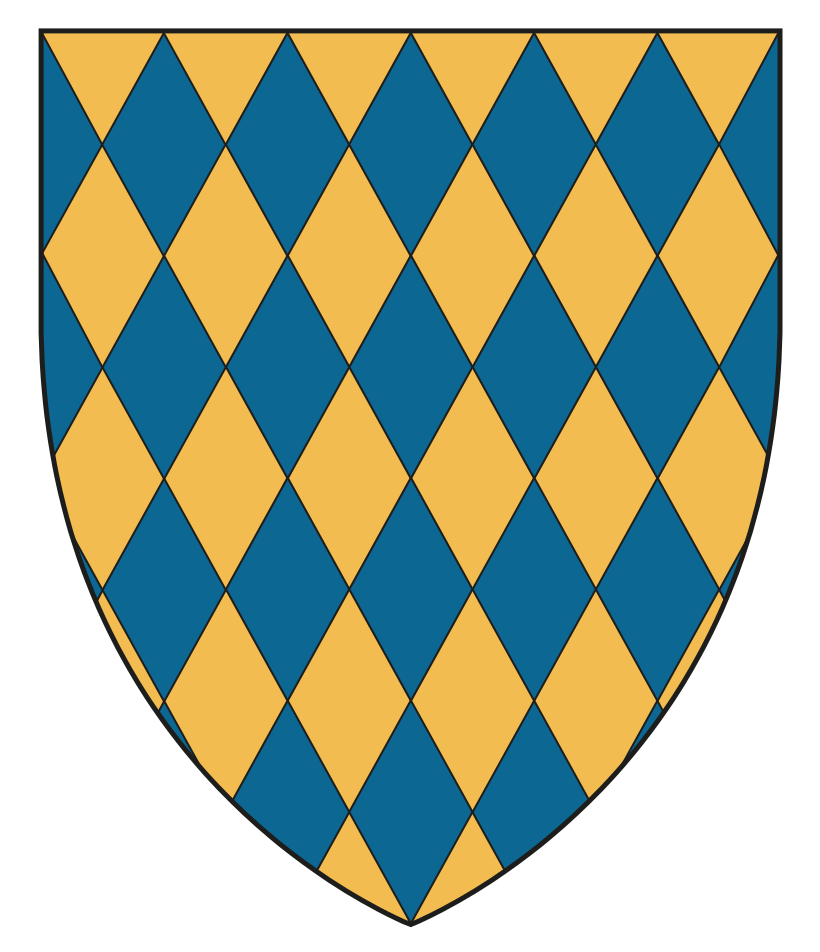
23. Robert de Châtillon
Lord of Châtillon-en Bazois


- Northern Wall
-

24. Assalit d'Azenière
Lord of Azenières -

25. Assalit de Tourzel
Lord of Tourzel -

26. Hugues Damas de Cousans
Lord of Couzan -

27. Armand Guillaume de Polignac
Viscount of Polignac -
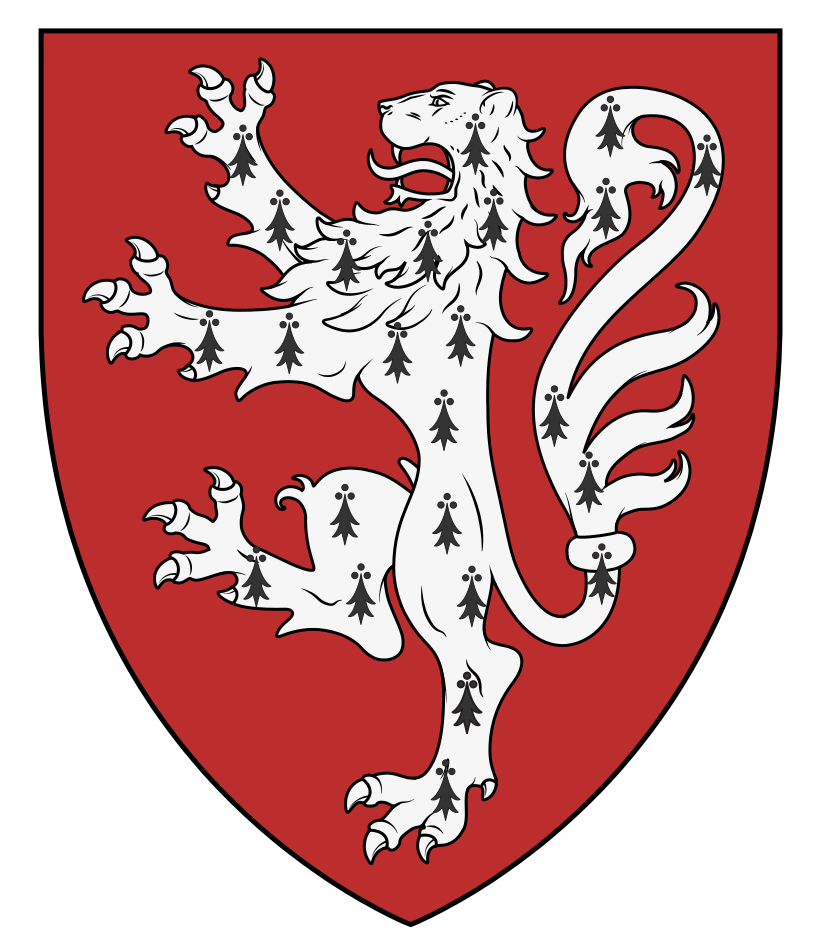
28. Pierre de Montaigut
Lord of Montaigut-le-Blanc -

29. Arnaud Flote de La Roche
-
Hidden or destroyed
The 15th century fireplace is built over this shield. -
Hidden or destroyed
The 15th century fireplace is built over this shield. -
Hidden or destroyed
The 15th century fireplace is built over this shield. -
Hidden or destroyed
The 15th century fireplace is built over this shield. -

30. Unknown
Possibly a cadet branche of La Roche-Aymon -

31. Artaud de Claveson
Lord of Claveyson -

32. Geoffroy de Clermont
Lord of Clermont-en-Viennois -

33. Gilles Aycelin de Montaigut
Lord of Montaigut-sur-Billom -

34. Jean de Grez
Viscount of Corbeil
Marshal of France


- Eastern Wall
-

35. Geoffroy de Joinville
Lord of Vaucouleurs -

36. Etienne de Mont Saint-Jean
Lord of Mont Saint-Jean -

37. Enguerrand de Marigny
Lord of Marigny, Ecouis and Mainneville
Grand Chamberlain and Chancellor
of France -

38. Pierre de Chambly
Lord of Chambly, Presles and Montreuil
Chamberlain of the King -

39. Guillaume d'Apchon
Lord of Apchon -
40. Unreadable
Possibly Foulques du Merle
Marshal of France -

41. Miles de Noyers
Lord of Noyers
Marshal and Grand Bouteiller of France -

42. Hugues de Bouville
Lord of Bouville, Farcheville and Milly
Chamberlain of France -

43. Giraud de Roussillon
Lord of Anjou and Maymont -

44. Itier de Bréon
Lord of Merdogne -

45. Renaud de Bourgogne
Count of Montbéliard -
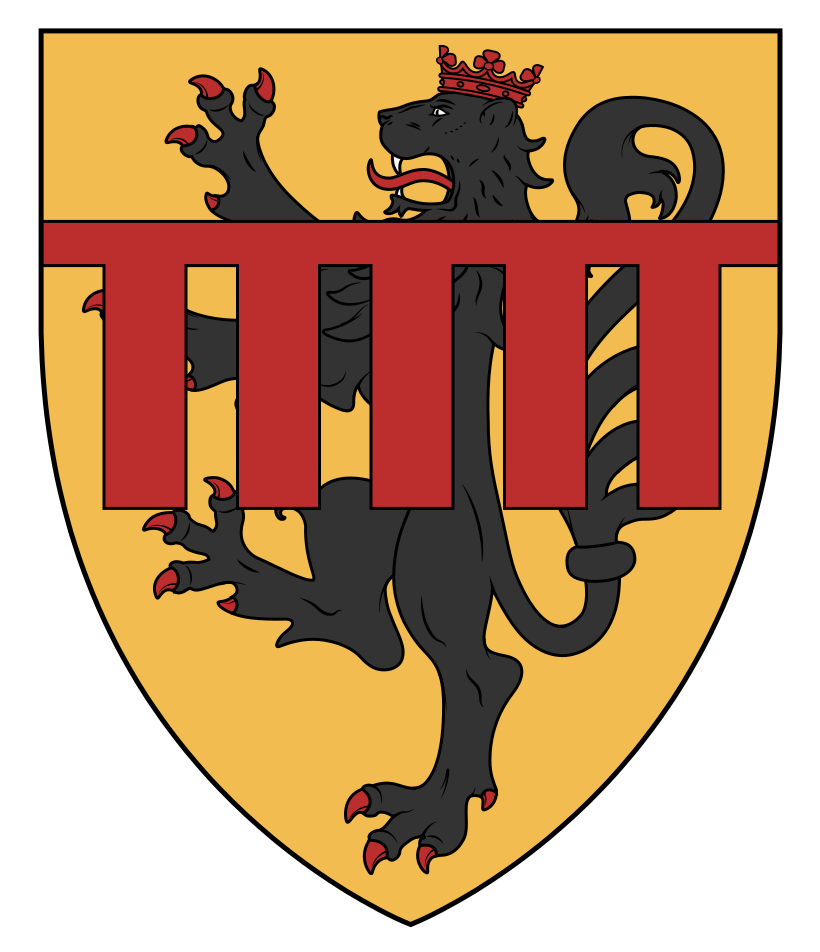
46. Jean de Dampierre
Lord of Dampierre and Saint-Dizier -

47. Bernard de la Tour
Lord of la Tour -
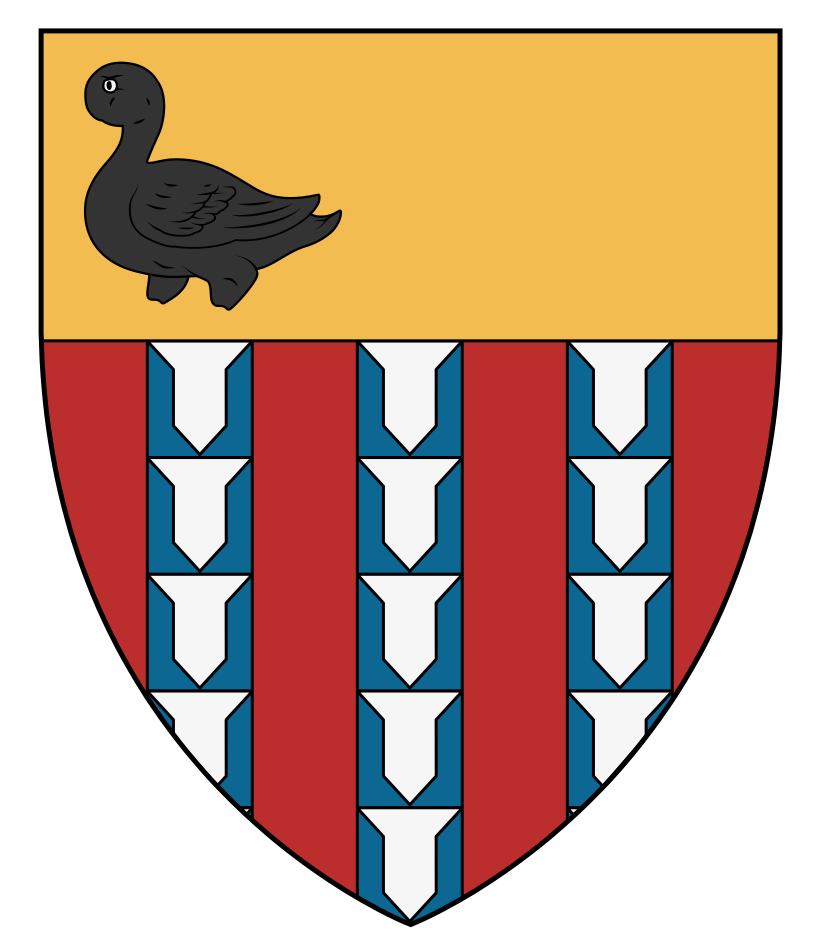
48. Gaucher de Châtillon
Lord of Châtillon and Crécy
Count of Porcien
Constable of France -

49. Béraud de Mercoeur
Lord of Mercoeur


