
Steme boerești din România: Difference between revisions
No edit summary |
No edit summary |
||
| Line 36: | Line 36: | ||
<gallery mode="nolines" caption="3rd page" align=center style= "color: #292929;font-size:1.2em;font-weight: normal;text-align:center;font-style: normal;"> | <gallery mode="nolines" caption="3rd page" align=center style= "color: #292929;font-size:1.2em;font-weight: normal;text-align:center;font-style: normal;"> | ||
Callimachi EHM.svg|19. Callimachi<br><span style="font-size:88%; line-height: 1.3em;">Moldavian and Wallachian princes</span> | Callimachi EHM.svg|19. Callimachi<br><span style="font-size:88%; line-height: 1.3em;">Moldavian and Wallachian princes</span> | ||
Câmpineanu EHM.svg|20. Câmpineanu<br><span style="font-size:88%; line-height: 1.3em;">Wallachian boyars</span> | |||
Cananau.svg|21. Cananò<br><span style="font-size:88%; line-height: 1.3em;">Moldavian boyars</span> | Cananau.svg|21. Cananò<br><span style="font-size:88%; line-height: 1.3em;">Moldavian boyars</span> | ||
</gallery> | </gallery> | ||
Latest revision as of 17:01, 6 March 2026
Emanoil Hagi-Mosco was a Romanian historian and publicist, founder, in 1971, of the National Commission of Heraldry, Genealogy, and Sigillography. He also published, in 1918, probably the most important Romanian armorial, the work Steme boerești din România. The armorial includes 90 family coats of arms from the aristocracy of the Kingdom of Romania at the beginning of the 20th century.
- 1st page
-

1. Argetoianu
Wallachian boyars -

2. Argyropol
Wallachian and Moldavian boyars
Byzantine princes -

3. Asan-Micșunești și Polizo
Wallachian and Moldavian boyars


-

4. Aslan
Moldavian boyars -

5. Bălăceanu
Wallachian boyars
Imperial counts -
6. Băleanu
Wallachian boyars


-

7. Balș
Moldavian boyars
Imperial barons
Russian nobles -

8. Bărcănescu
Wallachian boyars -
9. Beldiman
Moldavian boyars


- 2nd page
-
10. Bellio
Wallachian boyars
Austrian barons -
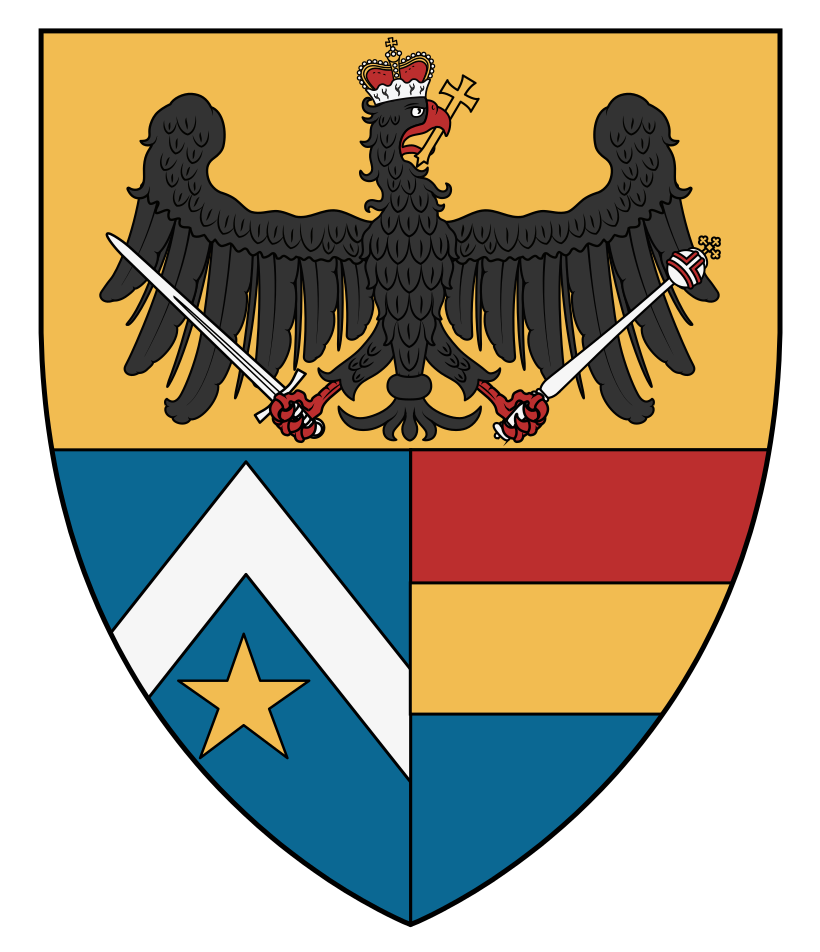
11. Bibescu
Wallachian princes and boyars
Austrian princes -

12. Blaremberg (Moret de)
Wallachian boyars
French nobles


-

13. Bogdan
Moldavian princes and boyars -
14. Brăiloiu
Wallachian boyars -
16. Brâncoveanu
Wallachian princes and boyars
Imperial, Austrian, and Byzantine princes
Hungarian counts

-

16. Bucșanu-Mănescu-Merișanu
Wallachian boyars -

17. Budișteanu
Wallachian boyars -
18. Buzescu
Wallachian boyars


- 3rd page
-

19. Callimachi
Moldavian and Wallachian princes -

20. Câmpineanu
Wallachian boyars -

21. Cananò
Moldavian boyars


-

22. Cantemir
Moldavian princes
Russian and Imperial princes -

23. Cantacuzino
Wallachian and Moldavian princes and boyars
Byzantine, Russian, and Austrian princes
Transylvanian nobles -

24. Caradja
Wallachian princes and boyars


-

25. Carp
Moldavian boyars -
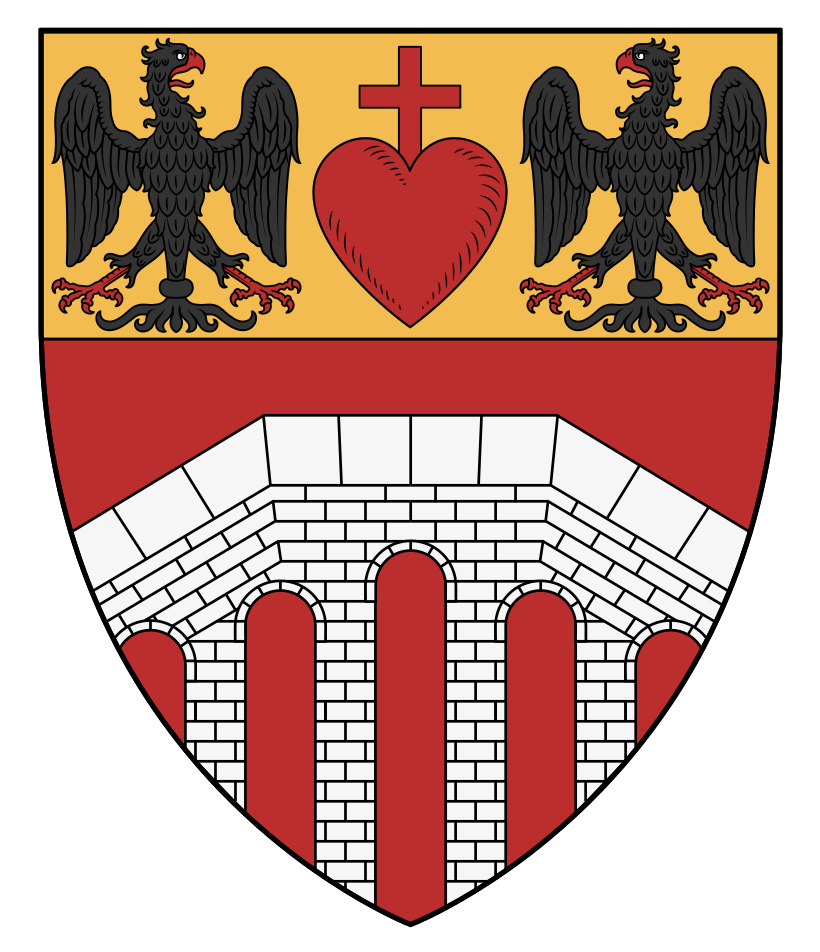
26. Catargi
Moldavian boyars -

27. Casimir
Moldavian boyars


- 4th page
-
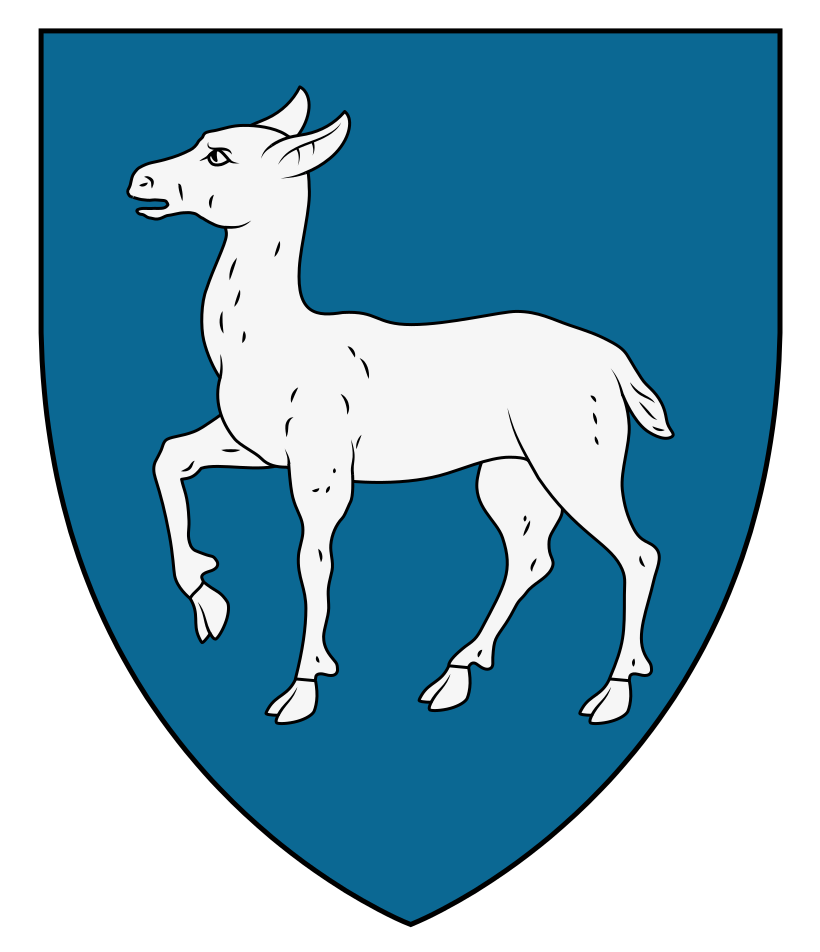
28. Cesianu (Jianu)
Wallachian boyars -

29. Cocorăscu
Wallachian boyars -
30. Cornescu (Grecianu)
Wallachian boyars


-

31. Costin
Moldavian boyars -

32. Cretzeanu
Wallachian boyars -

33. Cuza
Romanian, Moldavian, and Wallachian princes
Moldavian boyars


-

34. Donici
Moldavian boyars -
35. Dudescu
Wallachian boyars
Imperial counts -
36. Fălcoianu
Wallachian boyars

- 5th page
-
37. Filitti
Wallachian boyars -

38. Filipescu
Wallachian boyars -

39. Florescu
Wallachian boyars
Roman counts


-
40. Forĕscu (Mogâlde)
Moldavian boyars -

41. Ghica
Wallachian and Moldavian princes and boyars
Hungarian nobles -

42. Golescu
Wallachian boyars


-

43. Gore
Moldavian boyars
Russian nobles -
44. Grădișteanu
Wallachian boyars -

45. Grecianu
Wallachian boyars


- 6th page
-
46. Hajdeu-Petriceicu
Moldavian princes and boyars
Polish princes -
47. Hrisoscoleo
Wallachian and Moldavian boyars -
48. Hurmuzachi
Moldavian boyars
Austrian barons and knights
-

49. Jora
Moldavian boyars -

50. Kogâlniceanu
Moldavian boyars -
51. Kostachi (Boldur)
Moldavian boyars


-

52. Kretzulescu
Wallachian boyars
Italian princes -

53. Krupenski
Moldavian boyars
Polish and Russian nobles -

54. Lahovari
Wallachian boyars


- 7th page
-

55. Laptev
Wallachian boyars
Russian nobles -

56. Lenș (Linche)
Wallachian boyars
Roman counts -

57. Mavrocordato
Moldavian and Wallachian princes and boyars

_EHM.svg)

-

58. Mano
Wallachian and Moldavian boyars -
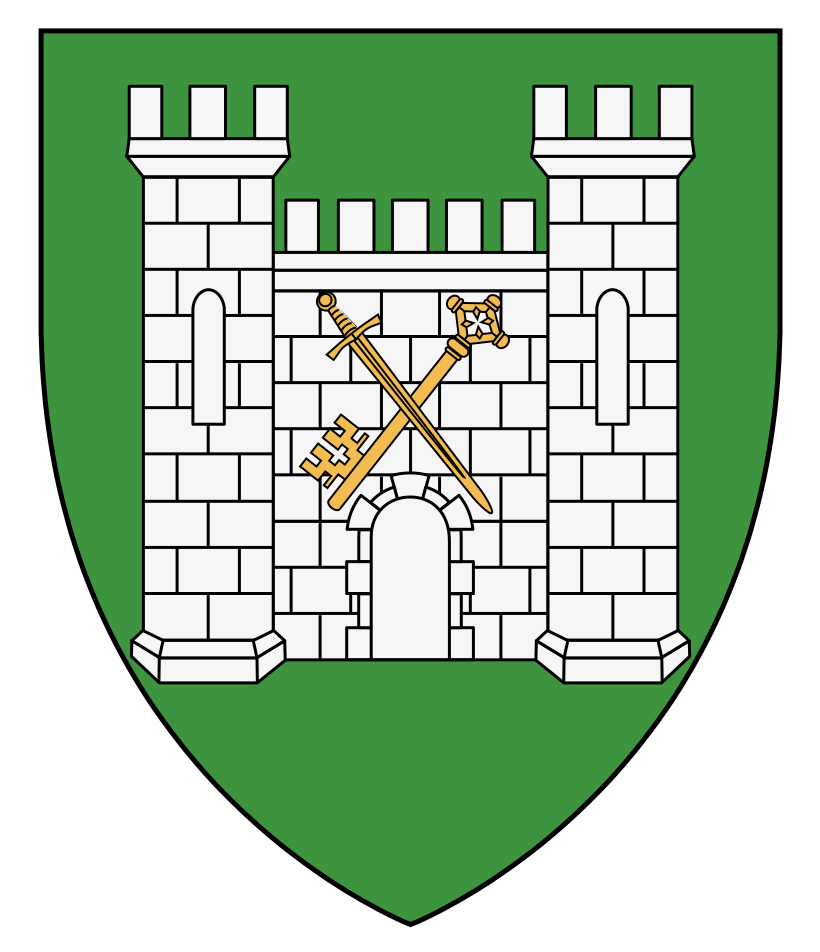
59. Miclescu
Moldavian boyars -
60. Moruzi
Moldavian and Wallachian princes and boyars
Russian princes


-
61. Mosco (Hagi-)
Wallachian boyars
Byzantine nobles -

62. Movilă
Moldavian and Wallachian princes and boyars
Polish princes -
63. Năsturel-Herăscu
Wallachian boyars
Imperial counts

- 8th page
-

64. Obedeanu
Wallachian boyars -
65. Odobescu
Wallachian boyars -

66. Olănescu
Wallachian boyars


-

67. Otetelișanu
Wallachian boyars -
68. Palladà
Moldavian boyars -
69. Paladi
Moldavian boyars

-
70. Pârșcoveanu
Wallachian boyars -

71. Prăjescu
Moldavian boyars -
72. Perticari
Wallachian boyars

- 9th page
-
73. Racotă
Wallachian boyars
Transylvanian nobles -

74. Racovitză (Cehan)
Moldavian and Wallachian princes and boyars -
75. Rallet
Moldavian boyars

-
76. Rizo (Nerulò)
Moldavian boyars -

77. Rasti
Wallachian boyars -

78. Rosetti
Moldavian princes and boyars
Transylvanian counts and nobles


-

79. Sallmen
Wallachian boyars -
80. Samurcaș
Moldavian boyars -
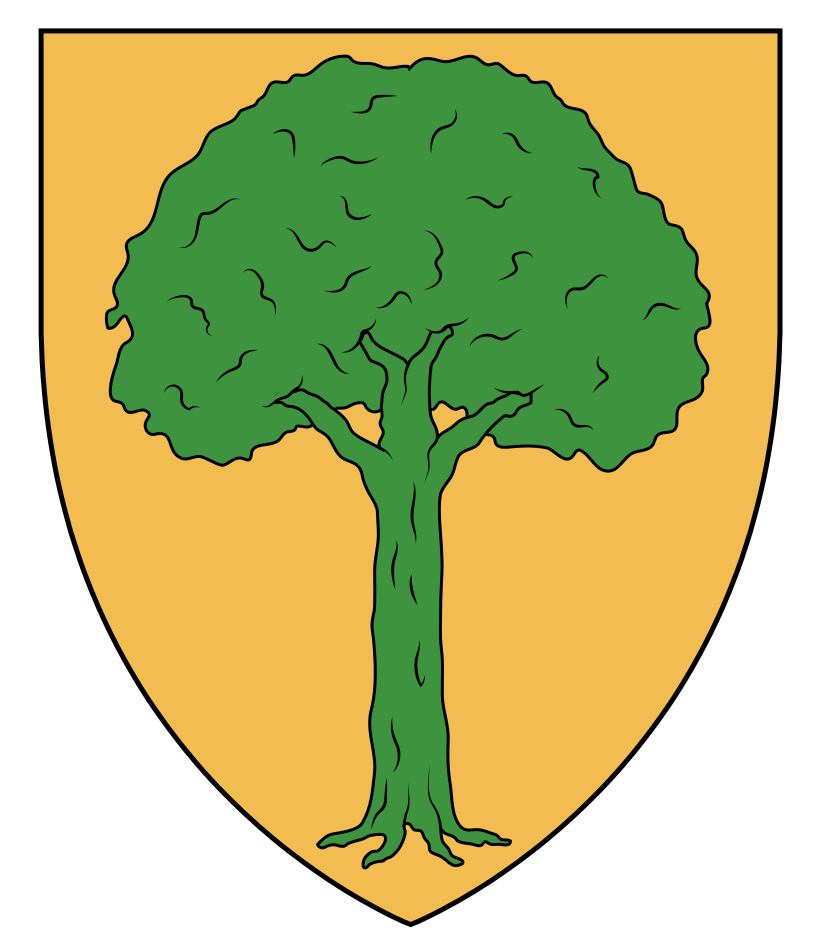
81. Schinà
Moldavian boyars


- 10th page
-

82. Slătineanu
Wallachian boyars -

83. Stârcea
Moldavian boyars
Austrian barons and knights -
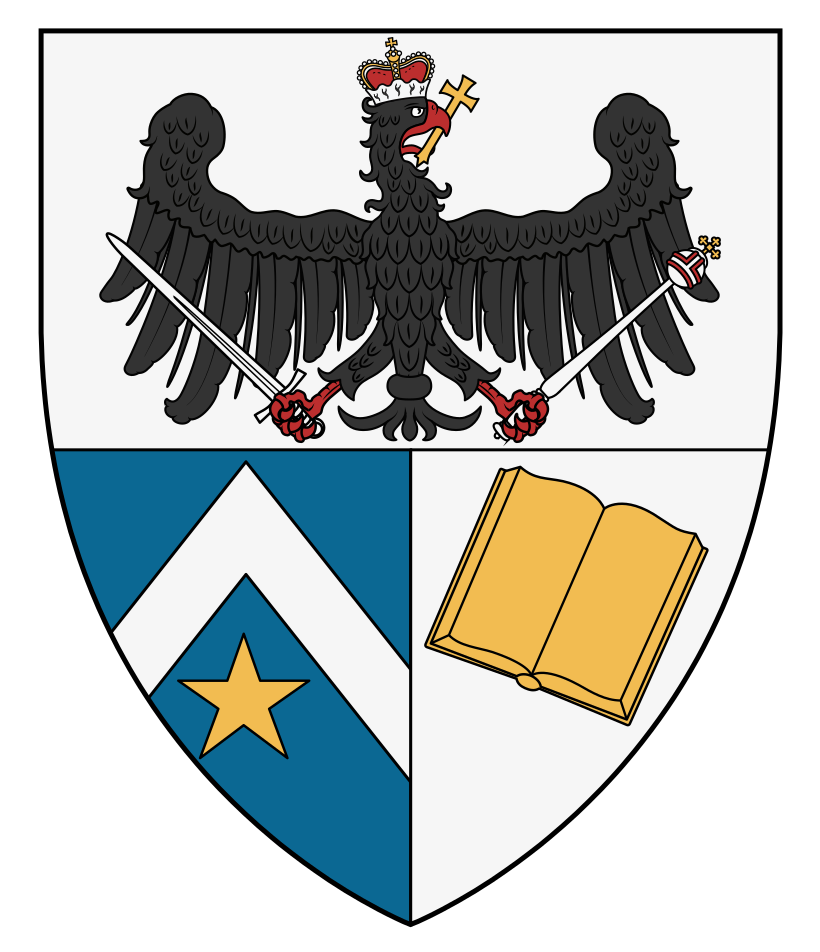
84. Știrbey (Bibescu)
Wallachian princes and boyars


_EHM.svg)
-
85. Sturdza
Moldavian princes and boyars
Russian princes
Transylvanian nobles -

86. Sutzo
Wallachian and Moldavian princes and boyars -
87. Văcărescu
Wallachian boyars

-

88. Vârnav
Moldavian boyars -

89. Vlădăianu
Wallachian boyars -

90. Zotta
Moldavian boyars
Austrian knights


