
Peerage of France: Difference between revisions
No edit summary |
No edit summary |
||
| Line 4: | Line 4: | ||
<gallery caption="Twelve Ancient Peers" align=center style= "color: #292929;font-size:1.2em;font-weight: normal;text-align:center;font-style: normal;"> | <gallery caption="Twelve Ancient Peers" align=center style= "color: #292929;font-size:1.2em;font-weight: normal;text-align:center;font-style: normal;"> | ||
Image: Reims.svg| [[Arch-bishopric of Reims|Duke-Archbishopric of Reims]] | Image: Reims.svg| [[Arch-bishopric of Reims|Duke-Archbishopric of Reims]] | ||
Image: Laon .svg| [[Bishopric of Laon|Duke-Bishopric of Laon]] | |||
Image: Langres.svg| [[Bishopric of Langres|Duke-Bishopric of Langres]] | Image: Langres.svg| [[Bishopric of Langres|Duke-Bishopric of Langres]] | ||
Image: Nanteuil.svg| [[Bishopric of Beauvais|Count-Bishopric of Beauvais]] | Image: Nanteuil.svg| [[Bishopric of Beauvais|Count-Bishopric of Beauvais]] | ||
Image: Chalons.svg| [[Bishopric of Châlons|Count-Bishopric of Châlons]] | Image: Chalons.svg| [[Bishopric of Châlons|Count-Bishopric of Châlons]] | ||
Revision as of 02:29, 4 June 2015
The Peerage of France consisted of the highest-ranking members of the French nobility. The original twelve peers were constituted in time immemorial.
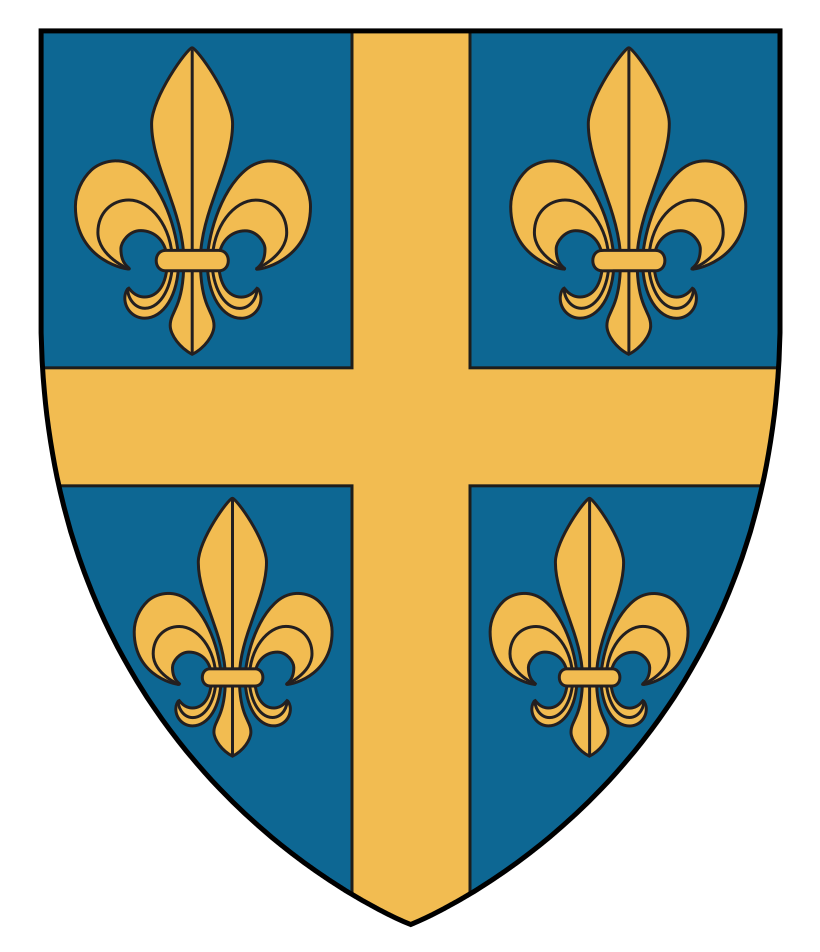
Later peers were created by the King of France. The coats of arms shown below depict the arms of the peer when the peerage was granted.
Peers who changed arms are marked with an asterisk (*), followed by a reference to titles later or formerly borne.
- Twelve Ancient Peers
-

-

-
-

-

-

-

-


- 13th Century
-
John II of Brittany
Duke of Brittany (1297) -

Charles of France
Count of Valois
Count of Anjou (1297) -

Robert II of Artois
Count of Artois (1297)


- 14th-15th Century
-

Philip of France
Count of Poitiers (1314) -

Charles of France
Count of La Marche (1316) -

Louis of France
Count of Evreux (1316) -

Philip of Evreux
Count of Angouleme (1317) -

Louis de Clermont
Count of La Marche (1321)
Duke of Bourbon (1327) -
Robert III of Artois
Count of Beaumont-le-Roger (1328) -
John of France
Count of Maine (1331)
Duke of Normandy (1332) -

Philip of France
Duke of Orleans (1344)
Count of Valois (1344) -
Louis II de Dampierre
Count of Flanders
Count of Nevers (1347) -

Charles II
King of Navarre
Count of Mantes (1353)
Count of Beaumont-le-Roger (1354)
Lord of Montpellier (1371) -
Louis of France
Duke of Anjou (1356)
Count of Maine (1360) -

John of France
Count of Poitou (1357)
Count of Mâcon (1359)
Duke of Berry (1360)
Duke of Auvergne (1360) -

Philip of France
Duke of Touraine (1360)
*later Duke of Burgundy -

Philip of France
Duke of Burgundy (1363)
*formerly Duke of Touraine -

Louis of France
Duke of Touraine (1386)
Duke of Orleans (1392)
Count of Valois (1392)
Count of Perigord (1399)
Count of Soissons (1404)
Lord of Coucy (1404)
Duke of Valois (1406) -

John of France
Duke of Touraine (1401)
Count of Mortagne (1407)
*later Dauphin of France -
John I of Alencon
Duke of Alencon (1404) -
Charles III
King of Navarre
Duke of Nemours (1404) -

Anthony of Burgundy
Duke of Brabant
Count of Rethel (1405) -

Peter of Navarre
Count of Mortain (1407) -

Louis of France
Dauphin of France
Duke of Guyenne
Count of Mortain (1414) -
John of France
Dauphin of France
Duke of Berry (1416)
*also Duke of Touraine -
Charles of France
Duke of Touraine (1416)
Duke of Berry (1417) -

Archibald Douglas
Earl of Douglas
Duke of Touraine (1423) -

John Stewart
Count of Evreux (1424) -

James I
King of Scotland
Count of Saintonge (1428) -

Gaston IV de Foix
Count of Foix (1458) -
Charles of Artois
Count of Eu (1458) -

Charles of Burgundy
Count of Nevers (1459) -
Charles of France
Duke of Berry (1461)
*later Duke of Normandy and Guyenne -

John II of Burgundy
Count of Nevers (1464) -

Charles of France
Duke of Normandy (1465)
Count of Mortain (1465)
*formerly Duke of Berry, later Duke of Guyenne -

Charles of France
Duke of Guyenne (1469)
*formerly Duke of Berry and Normandy -

Frederick of Naples
Count of Villefranche (1480) -
Francis of Orleans
Count of Angouleme
Duke of Valois (1498)


- 16th Century
-

Engelbert of Cleves
Count of Nevers (1505) -

Claude of France
Countess of Soissons (1505)
Lady of Coucy (1505) -

Gaston of Foix
Duke of Nemours (1507) -

Louise of Savoy
Duchess of Angouleme (1515)
Duchess of Anjou (1515)
Duchess of Nemours (1524)
Duchess of Bourbon (1527)
Duchess of Chatellerault (1527)
Duchess of Auvergne (1528)
Duchess of Chatellerault (1530) -

Charles IV de Bourbon
Duke of Vendome (1515) -

Francis of Bourbon
Duke of Chatellerault (1515) -
Jeanne of Orleans
Duchess of Valois (1516) -

Marguerite of Orleans
Duchess of Berry (1517) -

Claude de Lorraine
Duke of Guise (1528)
Duke of Aumale (1547) -
Marie d'Albret
Countess of Rethel
Duchess of Nevers (1539) -
Louise de Bourbon
Duchess of Montpensier (1539) -
Charles of France
Duke of Orleans (1540)
Duke of Angouleme (1540)
Duke of Chatellerault (1540)
Count of Clermont (1540)
Count of La Marche (1540)
Duke of Bourbon (1544) -
Marguerite of France
Duchess of Berry (1550) -

Anne de Montmorency
Duke of Montmorency (1551) -

Henry II
King of Navarre
Duke of Albret (1550) -

Alexander Edward of France
Duke of Anjou (1566)
Duke of Bourbon (1566)
Count of Forez (1566)
Duke of Auvergne (1569) -
Hercules Francis of France
Duke of Alencon (1566)
Duke of Chateau-Thierry (1566)
Count of Perche (1566)
Count of Meulan (1566)
Count of Mantes (1566)
Duke of Evreux (1569)
Count of Dreux (1569)
*later Duke of Anjou, etc. -

Sebastian of Luxembourg
Duke of Penthievre (1569) -

Nicolas de Lorraine
Duke of Mercoeur (1569) -

Antoine de Crussol
Duke of Uzes (1572) -

Charles de Lorraine
Duke of Mayenne (1573) -

Francis of Bourbon
Duke of Saint-Fargeau (1574) -
Hercules Francis of France
Duke of Anjou (1576)
Duke of Touraine (1576)
Duke of Berry (1576)
*also Duke of Alencon, etc. -

Anne de Joyeuse
Duke of Joyeuse (1581) -
Francis of Luxembourg
Duke of Piney-Luxembourg (1581) -

Jean Louis de Nogaret de La Valette
Duke of Épernon (1581) -

Charles I de Lorraine
Duke of Elbeuf (1581) -

Albert de Gondi
Duke of Retz (1581) -

Louis de Gonzague
Duke of Nevers
Duke of Rethel (1581) -

Charles de Hallwin
Duke of Hallwin (1587) -

Louis VII de Rohan
Duke of Montbazon (1588) -
Gilbert III de Lévis
Duke of Ventadour (1589) -
Hercule de Rohan
Duke of Montbazon (1588) -
Claude de La Trémoille
Duke of Thouars (1589) -

Gabrielle d'Estrées
Duchess of Beaufort (1597) -
César de Bourbon
Duke of Vendome (1598) -

Charles de Gontaut
Duke of Biron (1598)


