
Swedish knighthood during The Vasa period: Difference between revisions
No edit summary |
No edit summary |
||
| Line 131: | Line 131: | ||
Brahe 1561.svg|Nils Brahe<br><span style="font-size:88%; line-height:1.3em;">General<br>1627</span> | |||
Soop.svg|Erik Hansson Soop<br><span style="font-size:88%; line-height:1.3em;">Colonel<br>1627</span> | |||
Wrangel.svg|Herman Wrangel<br><span style="font-size:88%; line-height:1.3em;">Councillor of the Realm<br>1627</span> | |||
Tott.svg|Åke Tott<br><span style="font-size:88%; line-height:1.3em;">Councillor of the Realm<br>1627</span> | |||
Horn.svg|Klas Kristersson Horn<br><span style="font-size:88%; line-height:1.3em;">Councillor of the Realm<br>1627</span> | |||
</gallery> | </gallery> | ||
Revision as of 06:41, 7 March 2026
The highest medieval title outside the royal family was knight. In order to be dubbed a knight, a person was almost required to belong to an old noble family with great power and large estates. All knights between 1521 and 1654
Knights dubbed by Gustav Vasa | Eric XIV | Johan III | Gustav II Adolf
- Gustav Vasa
-

Ture Eriksson Bielke
Councillor of the Realm
1528 -

Erik Joakimsson Flemming
Councillor of the Realm
1528 -
Ivar Joakimsson Flemming
Councillor of the Realm
1528 -

Bengt Nilsson Färla
Councillor of the Realm
1528 -

Birger Nilsson Grip
Councillor of the Realm
1528 -

Karl Eriksson Gyllenstierna
Councillor of the Realm
1528 -

Peder Olofsson Hård
Councillor of the Realm
1528 -

Knut Andersson Lillie
Councillor of the Realm
1528 -

Måns Bryntesson Lilliehöök
Councillor of the Realm
1528 -

Måns Johansson Natt och Dag
Councillor of the Realm
1528 -

Lars Siggesson Sparre
Councillor of the Realm
1528 -

Johan Turesson Tre Rosor
Councillor of the Realm
1528 -

Nils Olofsson Vinge
Councillor of the Realm
1528 -

Sten Eriksson Leijonhufvud
Councillor of the Realm
1536 -
Svante Stensson Sture
Councillor of the Realm
1536 -

Per Joakimsson Brahe
Councillor of the Realm
1544


- Eric XIV
-

Dionysius Beurræus
Councillor of the Realm
1561 -
Hogenskild Nilsson Bielke
Councillor of the Realm
1561 -
Ture Pedersson Bielke
Councillor of the Realm
1561 -

Nils Andersson Boije
Councillor of the Realm
1561 -

Jöns Tordsson Bonde
Councillor of the Realm
1561 -

Gustaf Götriksson Fincke
Councillor of the Realm
1561 -
Göran Götriksson Fincke
Councillor of the Realm
1561 -
Klar Eriksson Flemming
Councillor of the Realm
1561 -
Bo Birgersson Grip
Councillor of the Realm
1561 -
Erik Göransson Gyllenstierna
Councillor of the Realm
1561 -
Göran Eriksson Gyllenstierna
Councillor of the Realm
1561 -
Nils Göransson Gyllenstierna
1561 -
Nils Karlsson Gyllenstierna
Councillor of the Realm & Kansler
1561 -
Erik Karlsson Gyllenstierna
1561 -

Nils Nilsson Krumme
Councillor of the Realm
1561 -

Hans Klasson Kyle
Councillor of the Realm
1561 -
Knut Knutsson Lillie
Councillor of the Realm
1561 -

Ivar Ivarsson Lillieörn
Councillor of the Realm
1561 -
Erik Månsson Natt och Dag
Councillor of the Realm
1561 -
Sigge Larsson Sparre
1561 -

Klas Åkesson Tott
Councillor of the Realm
1561 -

Arvid Turesson Trolle
Councillor of the Realm
1561 -

Erik Magnusson Ulfsparre
Councillor of the Realm
1561 -

Henrik Norman
Envoy from Pommern
1561 -

Jörgen Pudewils
Envoy from Pommern
1561 -

Arvid Urup
Envoy from Denmark
1561 -

Johan Rudelius
Envoy from Lübeck
1561 -

Johan Preute
Envoy from Danzig
1561 -

Måns Svensson Somme
Councillor of the Realm
1561 -
Claus Meex
Envoy from Livonia
1561 -

Hans Claesson Bielkenstierna
Councillor of the Realm
1561 -

Knut Haraldsson Soop
Councillor of the Realm
1561 -

Henrik Klasson Horn
Councillor of the Realm
1561 -

Hans Björnsson Lejon
Constable of Stockholm
1561 -
Åke Bengtsson Färla
Councillor of the Realm
1568


- Johan III
-

Gustav Axelsson Banér
Councillor of the Realm
1569 -
Sten Axelsson Banér
Councillor of the Realm
1569 -
Johan Axelsson Bielke
Councillor of the Realm
1569 -

Pontus De la Gardie
Councillor of the Realm
1569 -
Anders Pedersson Lilliehöök
Councillor of the Realm
1569 -

Knut Axelsson Posse
Councillor of the Realm
1569 -
Erik Larsson Sparre
Councillor of the Realm
1569 -

Axel Stensson Lewenhaupt
Councillor of the Realm
1570s -

Anders Keith
Councillor of the Realm
1575 -

Arvid Gustafsson Stenbock
Councillor of the Realm
1580 -
Herman Pedersson Flemming
Councillor of the Realm
1582 -
Karl Gustavsson Stenbock
Councillor of the Realm
1590s


.svg)


- Gustav II Adolf
-

Didrik Bas
Dutch legate
1616 -
Peder Gustafsson Banér
Councillor of the Realm
Chamberlain
1617 -

Magnus Pedersson Brahe
Lord High Steward
1617 -

Jesper Mattsson Cruus
Councillor of the Realm
Lord High Treasurer
1617 -

Jakob Pontusson De la Gardie
Lord High Constable
1617 -

Karl Karlsson Gyllenhielm
Councillor of the Realm
Field Marshal -

Göran Nilsson Gyllenstierna
Admiral of the Realm
1617 -
Henrik Karlsson Horn
Councillor of the Realm
Marshal of the Realm
1617 -

Axel Gustafsson Oxenstierna
Lord High Chancellor
1617 -

Axel Nilsson Ryning
Lord High Admiral
Lord High Constable
1617 -
Hugo Mysits van Hels
Dutch
1618 -
Nikolaus Voigdt
Dutch
1618 -
Petrus NN
Dutch mayor
1618 -
Jakob van Dijk
Swedish ambassador in Hague
Mayor in Gothenburg
1618 -
Kornelius Paw
Dutch
1618 -

Christoph Ludwig Rasche
Hovråd
1618 -
Johan Banér
Councillor of the Realm
1625 -

Gustaf Horn
Councillor of the Realm
1625 -

Henry St George
English Herald
1627 -
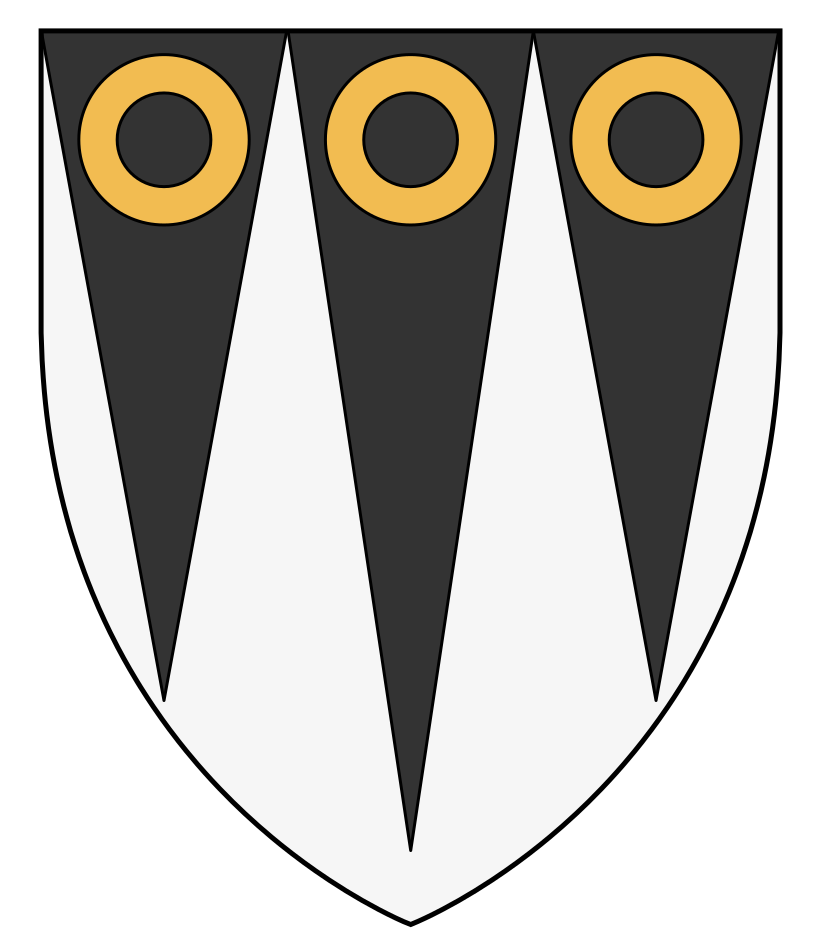
Peter Young
English Courtier
1627 -

Alexander Leslie
Field marshal
1627 -

Patrick Ruthven
Lieutenant General
1627 -

David Drummond
Major General
1627 -

Thomas Muschamp
Colonel
1627 -

John Hepburn
1627 -
Nils Brahe
General
1627 -
Erik Hansson Soop
Colonel
1627 -

Herman Wrangel
Councillor of the Realm
1627 -
Åke Tott
Councillor of the Realm
1627 -
Klas Kristersson Horn
Councillor of the Realm
1627


