
Cinque Ports: Difference between revisions
No edit summary |
No edit summary |
||
| Line 165: | Line 165: | ||
Finch Winchilsea.svg|Heneage Finch<br><span style="font-size:88%; line-height: 1.3em;">1660</span> | Finch Winchilsea.svg|Heneage Finch<br><span style="font-size:88%; line-height: 1.3em;">1660</span> | ||
James Stuart, Duke of York.svg|James Stuart<br><span style="font-size:88%; line-height: 1.3em;">1660-1773</span> | James Stuart, Duke of York.svg|James Stuart<br><span style="font-size:88%; line-height: 1.3em;">1660-1773</span> | ||
Beaumont | Beaumont Toison.svg|John Beaumont<br><span style="font-size:88%; line-height: 1.3em;">1673-1691</span> | ||
Sidney.svg|Henry Sidney<br><span style="font-size:88%; line-height: 1.3em;">1691-1702</span> | Sidney.svg|Henry Sidney<br><span style="font-size:88%; line-height: 1.3em;">1691-1702</span> | ||
</gallery > | </gallery > | ||
Revision as of 15:45, 24 June 2022
A confederation of coastal towns in southeast England, it was formed for military and trade purposes.
At the head of the Cinque Ports were Lord Wardens who had the status of barons and the right to attend the king's parliament.
- Coat of Arms
-

Cinque Ports
Arms from 1305

- Lord Wardens of the Cinque Ports & Constables of Dover Castle
- 11th century
-

Godwine, Earl of Wessex
1045-1053 -

Harold Godwinson
1053-1066 -

Bertram Ashburnham
1066 -

William de Peverell
1066 -

Odo, Bishop of Bayeux
1066-1084 -

John de Fiennes
1084-1085 -
James de Fiennes
1085-1111


- 12th century
-
John de Fiennes
1111-1138
The younger, son of James -

Eustace de Boulogne
1138-1153 -

Walkelin de Magminot
1153-1154 -

Robert Fitz Bernard
1154-1169 -

Hugo de Mara
1169-1187 -

Alan de Valoines
1187-1190 -

Matthew de Clere
1190-1195 -

William de Wrotham
1195-1201


- 13th century
-

Thomas Basset
1201-1202 -

Hubert de Burgh
1202-1203 -

William de Huntingfield
1203-1204 -

William Longespee
1204-1207 -

Geoffrey FitzPiers
1207-1213 -
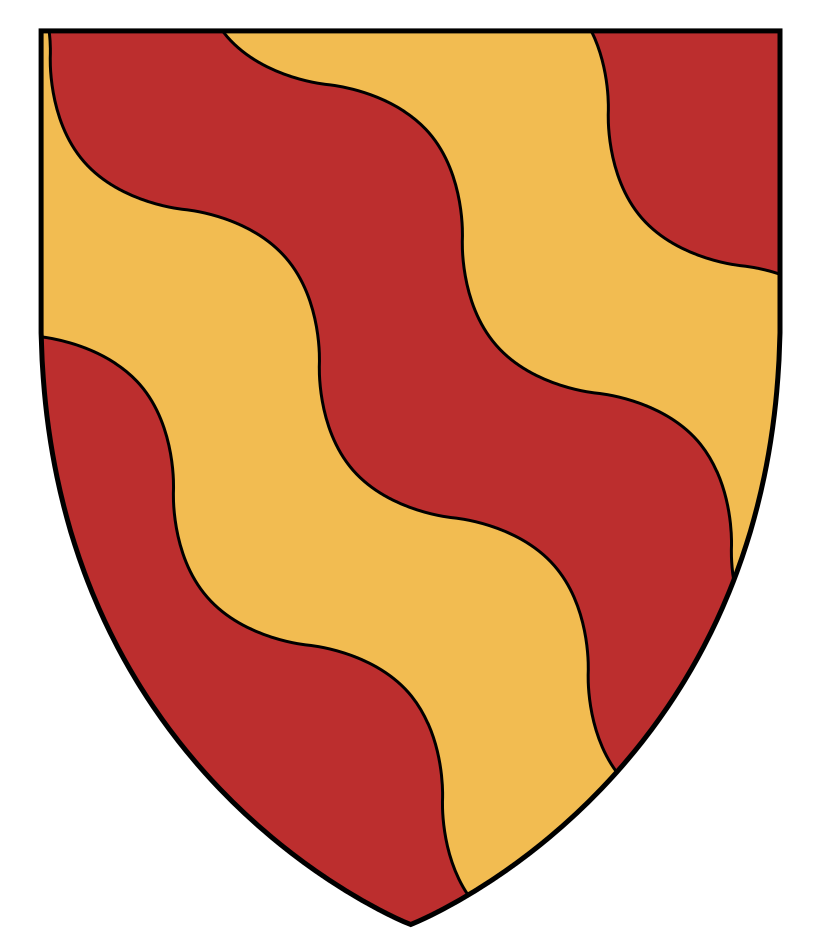
William de Brewer
1213-1215 -

William de Warenne
1214 -
Hubert de Burgh
1215-1220 -

Henry de Braybrooke
1220 -

Robert de Neresford
1221-1223 -

Hugh de Windsor
1223 -

Stephen de Langton
1223-1224 -

Geoffrey de Lucy
1224-1225 -

Hubert de Hoese
1225 -

Geoffrey de Shirland
1225-1226 -

William d'Avranches
1226-1227 -

Bertram de Criol
1227 -
Hubert de Burgh
1227-1232 -
Henry de Hoese
1232 -

Stephen de Segrave
1232-1235 -

Walerand le Tyais
1235 -

Humphrey de Bohun
1235 -

Hamo de Crevequer
1235 -
Bertram de Criol
1236 -

Peter de Rivaux
1236 -
Henry de Hoese
1236-1241 -

Pierre de Savoie
1241-1242 -
Bertram de Criol
1242-1255 -

Reginald de Cobham
1256-1258 -

Roger de Northwode
1258 -

Nicholas de Moels
1258 -

Richard de Grey
1258-1259 -

Hugh Bigod
1259-1261 -
Nicholas de Criol
1260-1263 -

Robert Walerand
1261-1262 -
Walter de Burgsted
1263 -
Robert Walerand
1263 -
Richard de Grey
1263 -
Hamo de Crevequer
1263 -

Edmund Crouchback
1263 -
Humphrey de Bohun
1263 -

Henry de Sandwich
1263 -

John de la Haye
1263 -
Richard de Grey
1263 -

Roger de Leybourne
1263-1264 -

Henry de Montfort
1264-1265 -

Matthew de Hastings
1265 -
Roger de Leybourne
1265 -

Prince Edward Longshanks
1265-1266 -
Matthew de Bezille
1266-1267 -

Stephen de Penchester
1267-1298 -

Robert de Burghersh
1298-1306


- 14th century
-
Henry de Cobham
1306-1307 -

Robert de Kendall
1307-1315 -
Henry de Cobham
1315 -
Robert de Kendall
1315-1320 -

Bartholomew de Badlesmere
1320-1321 -

Hugh le Despencer
1321 -

Edmund of Woodstock
1321-1323 -

John Peche
1323-1324 -
Robert de Kendall
1324-1325 -

Ralph Basset
1325-1326 -
Bartholomew de Burghersh
1327-1330 -

William de Clinton
1330-1343 -
Bartholomew de Burghersh
1343-1355 -

Roger de Mortimer
1355-1359 -
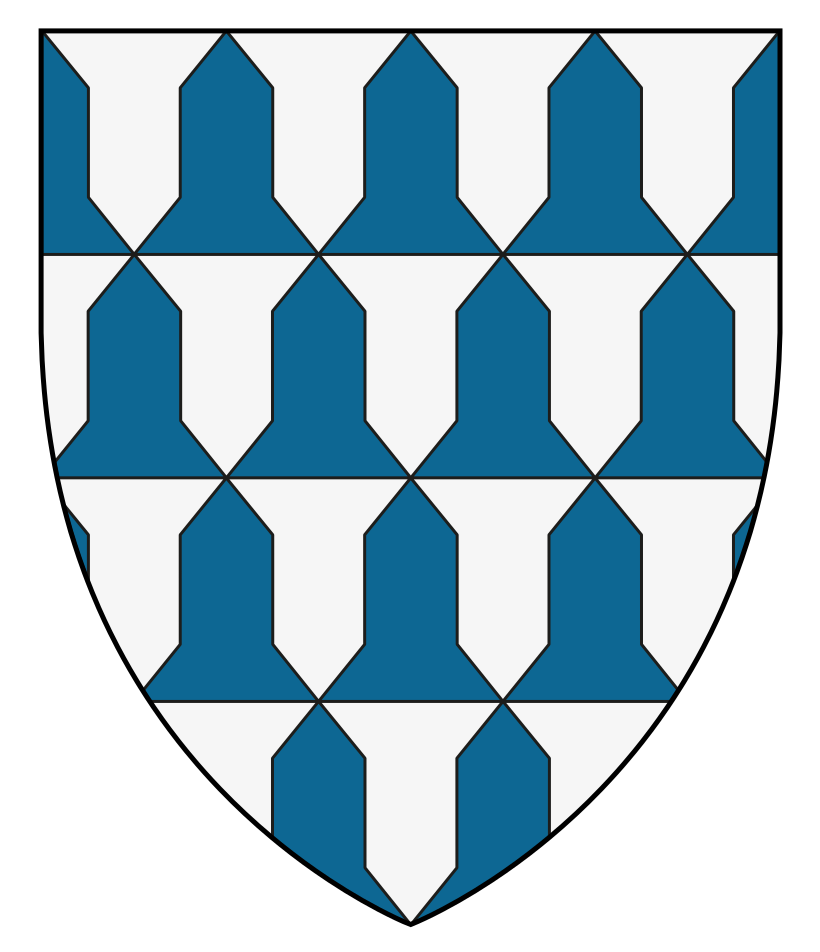
John de Beauchamp of Somerset
1359-1360 -

Robert de Herle
1361-1364 -

Ralph Spigurnel
1364-1369 -

Richard de Penbrugge
1369-1371 -

Andrew de Guildford
1371-1372 -

William le Latimer
1372-1376 -

Thomas de Reynes
1376 -

Edmund of Langley
1376-1381 -

Robert de Ashton
1381-1384 -

Simon de Burley
1384-1388 -

John Devereux
1388-1393 -

John de Beaumont
1393-1396 -
Edmund of Langley
1396-1398 -

John de Beaufort
1398-1399 -

Thomas de Erpyngham
1399-1409


- 15th century
-

Henry of Monmouth
1409-1413 -

Thomas FitzAlan
1413-1415 -

Humphrey of Lancaster
1415-1447 -
James Fiennes
1447-1450 -

Humphrey Stafford
1450-1460 -

Richard Woodville
1460 -

Richard Neville
1460-1471 -

John Scott of Brabourne
1471 -

William FitzAlan
1471-1488 -

Philip Fitz-Lewes
1488-1492 -
William Scott of Brabourne
1492-1493 -

Henry Tudor
1493-1509


- 16th century
-

Edward Poynings
1509-1521 -

George Neville
1521 -
Edward Guildford
1521-1533 -

George Boleyn
1533-1536 -

Henry Fitzroy
1536 -

Thomas Cheyne
1536-1539 -

Arthur Plantagenet
1539-1542 -
Thomas Cheyne
1542-1558 -

William Brooke
1558-1597 -
Henry Brooke
1597-1603


- 17th century
-

Henry Howard
1604-1614 -

Robert Carr
1614-1615 -

Edward la Zouche
1615-1625 -

George Villiers
1625-1628 -

Theophilus Howard
1628-1640 -

James Stewart
1641-1642 -
Edward Boys
1642-1646 -
John Boys
1646-1648 -

Algernon Sidney
1648-1651 -
Thomas Kelsey
1651-1656 -
Robert Blake
1656-1657 -

Heneage Finch
1660 -

James Stuart
1660-1773 -

John Beaumont
1673-1691 -
Henry Sidney
1691-1702


